
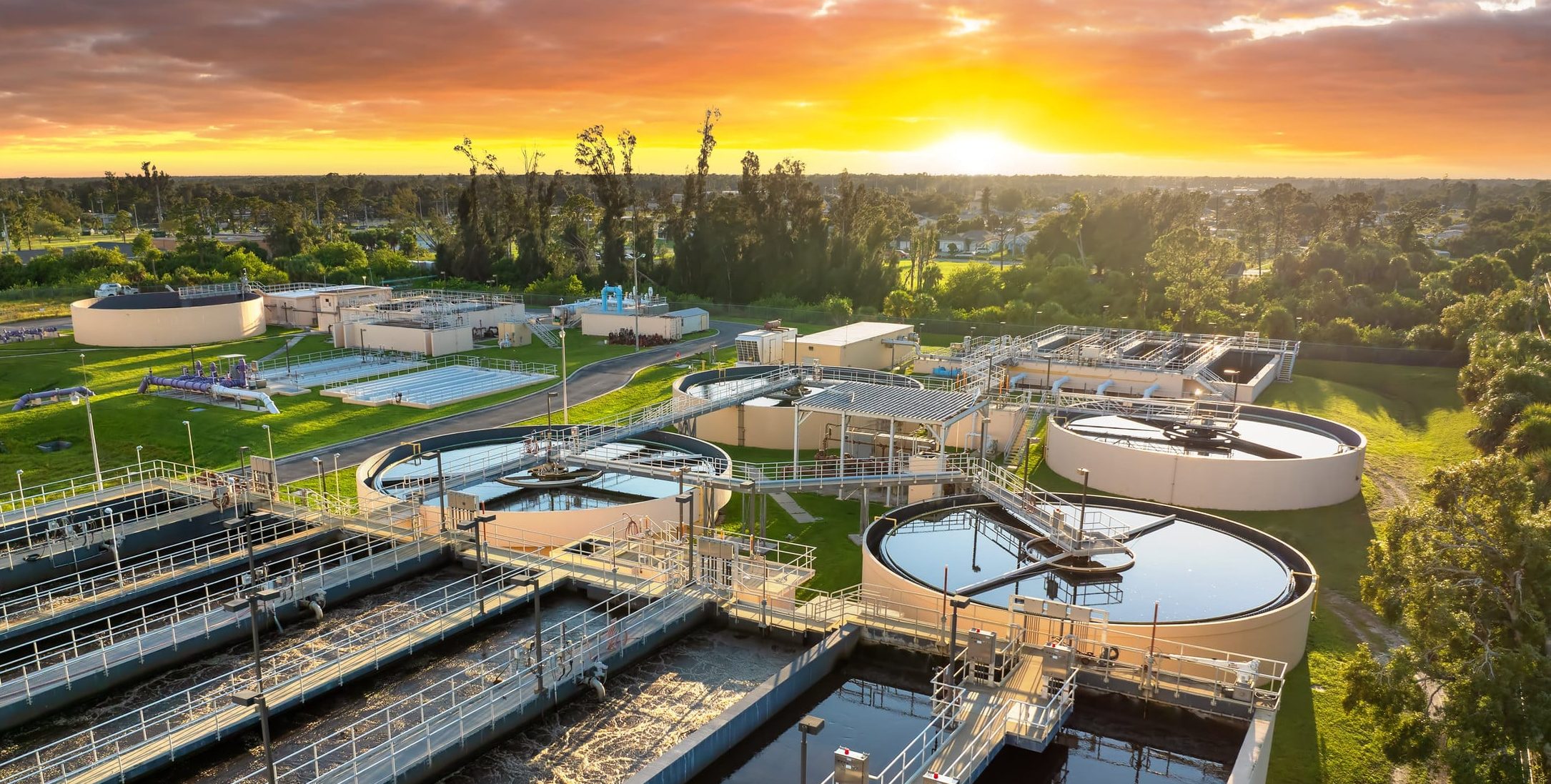
Build-Own-Operate (BOO) agreements allow municipalities and businesses to secure reliable water and wastewater treatment without the upfront cost and long-term responsibility of owning the infrastructure.
BOO is a specialized contract that can deliver needed infrastructure with no upfront investment
As public and private entities in developing countries adopt modern water and wastewater treatment — and those in developed countries deal with the need to replace legacy infrastructure — they often face the same problem: how to pay for it.
A Build-Own-Operate (BOO) agreement is a long-term service contract in which a specialized company finances, designs, builds, owns, and operates water or wastewater infrastructure while the customer pays for the treatment service rather than purchasing the asset.
This approach allows organizations to secure the treatment capacity they need with little or no upfront capital investment while shifting responsibility for operations and maintenance to an experienced provider.
Variations on the service-based BOO model include build-operate-transfer (BOT) and build-own-operate-transfer (BOOT); in those contracts, the infrastructure eventually reverts to the partner at the end of the contract term.
At Fluence, this delivery model is offered through Water Management Services, allowing municipalities and industrial customers to receive reliable water or wastewater treatment without owning or operating the infrastructure.
Why More Organizations Are Considering BOO
While BOO is widely known for delivering large public-private partnership (PPP) infrastructure projects, organizations today are increasingly evaluating the model for practical business reasons. Rising construction costs, aging infrastructure, tighter budgets, and increasing water demand are prompting municipalities and businesses to rethink how they finance, build, and operate water and wastewater infrastructure.
Organizations often consider the BOO model because it can help them:
- Preserve capital for core business operations and strategic investments
- Accelerate project delivery compared to traditional procurement methods
- Replace aging infrastructure without major upfront expenditures
- Access specialized operating expertise for increasingly complex treatment systems
- Increase water resilience amid growing demand, water scarcity, and changing regulations.
- Reduce long-term operational risk through performance-based agreements
BOO can be a good fit for both public and private organizations. Municipalities often use it through public-private partnerships (PPPs), while manufacturers, commercial developments, resorts, and other facilities use it to secure reliable water and wastewater treatment without owning or operating the infrastructure themselves.
Today, BOO is increasingly used for water and wastewater infrastructure because it combines financing, specialized expertise, and long-term operational accountability in a single delivery model.
Thinking About a BOO Model for Your Project?
Fluence delivers Build-Own-Operate (BOO) solutions that remove upfront capital costs while ensuring long-term performance and compliance.
From decentralized municipal systems to complex industrial applications, Fluence finances, builds, and operates treatment systems tailored to your needs.
While BOO has been used for decades across infrastructure sectors, it has become particularly valuable for water and wastewater treatment, where specialized operational expertise, regulatory compliance, and long-term reliability are critical.
How Fluence Delivers BOO Solutions
With a BOO structure, customers purchase water or treatment services—not the infrastructure itself. Fluence finances, designs, builds, owns, operates, and maintains the system, allowing customers to avoid major capital expenditures while benefiting from long-term operational expertise and performance accountability.
Whether serving a municipality, industrial facility, or commercial development, BOO can be adapted to a wide variety of applications, including:
- Municipal drinking water: Expand capacity, improve reliability, and reduce upfront capital costs.
- Municipal wastewater: Meet regulatory requirements and accommodate population growth without owning the infrastructure.
- Industrial manufacturing: Secure reliable process water and wastewater treatment while preserving capital for core operations.
- Food & beverage: Ensure consistent water quality and manage high-strength wastewater with specialized expertise.
- Mining: Treat challenging source water and wastewater in remote or water-scarce locations.
- Resorts & hospitality: Provide dependable water and wastewater services where municipal infrastructure is limited.
- Remote communities & workforce camps: Deliver self-contained treatment systems in areas without centralized utilities.
- Data centers: Support reliable cooling water and water reuse strategies for high-demand operations.
Additional applications include industrial parks, campuses, commercial developments, government facilities, and other sites requiring dedicated water or wastewater infrastructure.
Through Water Management Services, Fluence finances, designs, builds, owns, operates, and maintains the treatment infrastructure while the customer purchases water or wastewater services through a long-term agreement. This approach allows organizations to secure treatment capacity without assuming responsibility for asset ownership or day-to-day operations.
BOO Versus Traditional Infrastructure Models
| Traditional Ownership | BOO Model |
| Large upfront capital investment | Minimal upfront capital |
| Owner responsible for O&M | Provider responsible |
| Longer procurement and construction | Faster deployment |
| Performance risk on owner | Performance guarantees |
| Technology upgrades managed internally | Technology managed by provider |
Common Misconceptions About BOO
Despite the many benefits of BOO and BOOT contracts, there are common misconceptions that raise questions about entrusting a resource as essential as water to a private company.
Communities may fear a loss of self-determination. However, in today's BOO agreements, the public partner retains its governmental authority and oversight. A contract can apply to a specific plant, capacity expansion, or treatment service rather than an entire utility system.
Businesses may fear loss of control or price gouging. In reality, however, today's BOO agreements are generally performance-based and establish upfront rate structures. The service company must deliver at a specified price, and if it does not deliver the contracted volume at the specified quality, it doesn't get paid, a dynamic that incentivizes performance.
Another misconception is that customers will have to pay more on the back end for service-based agreements and that owning an asset maximizes cost-efficiency. BOO agreements place design, construction, operations, and maintenance under the care of one long-term provider, encouraging decisions based on the entire life cycle of a plant that reduce operating, maintenance, and replacement costs.
Whole-life costing takes into consideration an alignment of interests. For a provider, cutting corners can lead to costly headaches rather than higher profit margins. In the long run, consistency matters for the bottom line.
What happens at the end of a BOO contract term? The parties may renew or renegotiate the agreement or simply part ways. With a service-based model, the provider's goal is not to walk away with a lump sum, but to leave the customer with a facility and third-party equipment warranties. The goal is to be a responsive, reliable long-term partner that motivates customers to renew their agreements.
How BOO Supports Long-Term Water Resilience
BOO contracts help organizations respond to today's water realities. Increased population growth in many regions creates new water demand. Regulations are becoming more challenging due to pressures on ecosystems and human health, including awareness of emerging contaminants.
BOO contracts allow regions with limited access to capital to receive the treatment they need for a more resilient future, accelerate timelines, and keep specialists in charge of compliance in a changing regulatory landscape.
Water reuse can increase water sustainability more cost-effectively than perhaps any other single measure. But reuse comes with treatment challenges that a specialized water company is equipped to handle. A municipality, business, or industrial site already has its mission. Entrusting it to a dedicated company can enhance a site's operational resilience with an experienced operations and maintenance staff.
How Can Fluence Help?
Whether you're expanding a municipal utility, developing a new industrial facility, or replacing aging infrastructure, the right delivery model can reduce capital risk while accelerating deployment. Fluence's Water Management Services combine financing, engineering, construction, and long-term operations into a single solution that helps organizations secure reliable water infrastructure without major upfront investment.
Contact the experts at Fluence to discuss how Water Management Services can reliably provide the water municipalities, businesses, and industrial operations need right now with no upfront investment.
Build-Own-Operate FAQs
Can Municipalities Use BOOs?
Yes. Municipalities, utilities, and other public entities can use BOOs to deliver drinking water, wastewater treatment, desalination, and water reuse infrastructure. The municipality defines the required service and performance standards, while the private provider assumes responsibility for financing, construction, ownership, operation, and maintenance. Procurement and approval requirements vary according to local laws and regulations.
Does BOO Mean Giving Up Control?
No. The water services provider owns and operates the treatment infrastructure, but the customer establishes the service requirements under contract. These may include treatment capacity, water quality, availability, reporting, pricing, and regulatory performance. Municipal partners retain their governmental authority and oversight responsibilities. A BOO contract can cover one plant or treatment service without transferring control of an entire utility system.
Who Owns the Equipment in a BOO Agreement?
The service provider owns the treatment plant and equipment under a true build-own-operate agreement. The provider typically finances, designs, builds, operates, maintains, and replaces the infrastructure as required. The customer purchases treated water, wastewater treatment, reuse capacity, or another defined service rather than purchasing and maintaining the physical assets.
Is BOO Only Appropriate for Large Infrastructure Projects?
No. BOO is often associated with large, capital-intensive projects, but project size is only one consideration. The model can also support decentralized and on-site systems when customers have predictable long-term demand but do not want to own or operate the infrastructure. Smaller municipal systems, industrial facilities, resorts, developments, remote communities, and worker camps may all benefit from BOO delivery.
Does BOO Cost More Than Owning a Treatment Plant?
Not necessarily. Direct ownership requires more than the initial construction investment. Other factors include staffing, maintenance, replacement equipment, parts inventories, compliance, technology updates, and unexpected repairs. A long-term BOO agreement assigns these responsibilities to one provider, encouraging whole-life design and operating decisions while providing the customer with a more predictable service cost.
What Happens at the End of a BOO Contract?
BOO infrastructure does not automatically transfer to the customer when the contract ends. The parties may renew the agreement, negotiate new terms, arrange for the customer to purchase the system, replace the infrastructure, or terminate the service relationship in accordance with the contract. These options should be established at the beginning of the agreement so both parties understand the long-term framework.


