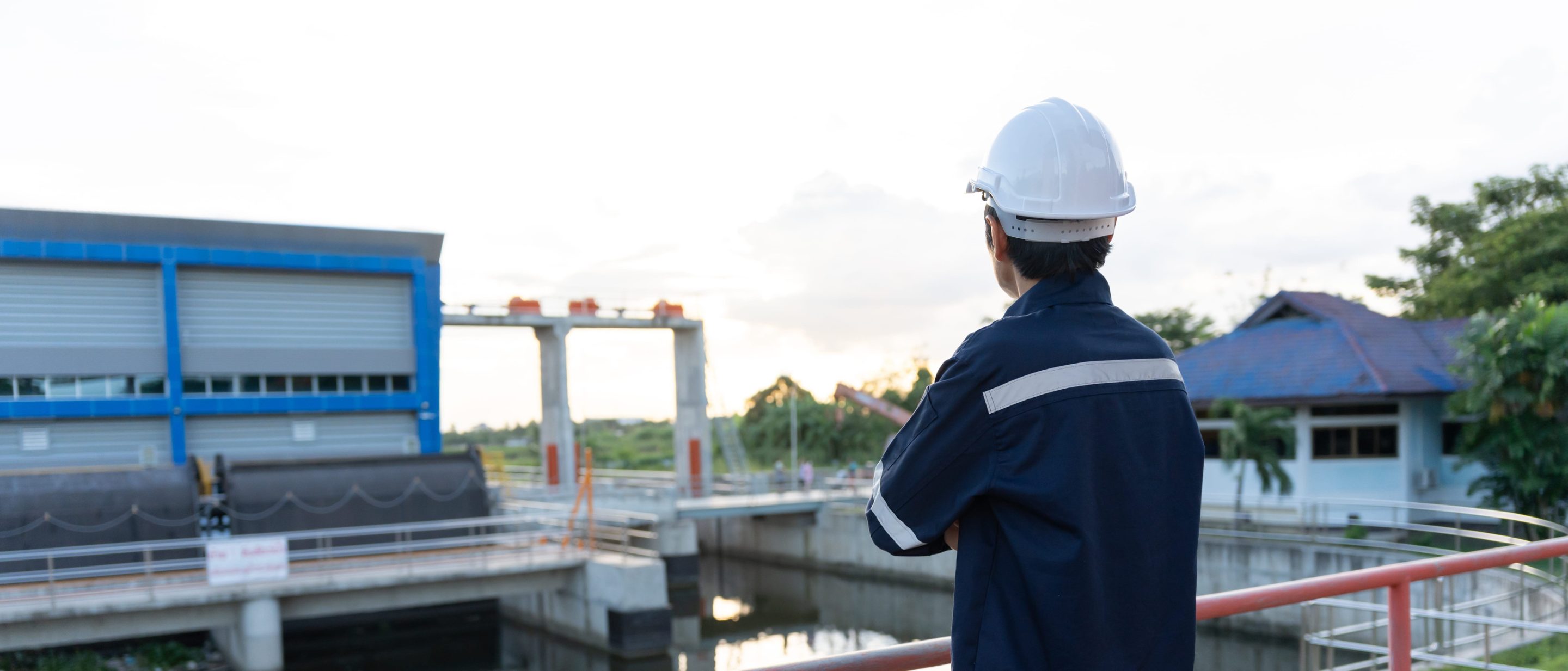
A tighter wastewater permit might call for a change to a plant, not a replacement. Fluence can identify options to retrofit or upgrade your plant to address the compliance gap.
New permit limits may require a targeted upgrade, not the replacement of a plant that still has useful life
A tighter discharge permit can expose a compliance gap even at a treatment plant that otherwise runs well. A new limit on nutrients, biochemical oxygen demand, total suspended solids, or another parameter does not necessarily mean the plant must be replaced.
Instead, the first step is to diagnose the treatment gap and determine whether a targeted upgrade can address it, particularly when the existing plant still has significant useful life.
Identify the Cause of the Treatment Gap
Because wastewater permits combine technology-based and water-quality-based effluent standards with monitoring and reporting requirements, evaluating upgrade options starts with a careful reading of the permit.
Operators must define the compliance problem precisely: Which parameter creates the compliance gap, how current effluent quality compares with the new limit, and whether the plant misses the target consistently or only during peak flows, higher loading, seasonal changes, or other operating conditions.
Nutrient limits are a growing focus because excess nitrogen and phosphorus can contribute to eutrophication, harmful algal blooms, oxygen depletion, and dead zones that affect aquatic life in receiving waters and watersheds.
Operational data can help determine whether the problem is a process limitation, an operating or maintenance issue, or a combination of the two. Fluence's Smart Operations provides monitoring and analytics that can help identify performance issues, support troubleshooting and diagnostics, and inform operational decisions.
Determine What Can Stay and What Must Change
Once the treatment gap is defined, the next step is to review what still works. That review should cover the condition and remaining service life of the plant's existing infrastructure and treatment assets. The appropriate upgrade depends on the weakness. A facility might need additional biological treatment, greater aeration or treatment capacity, improved nutrient removal, tertiary polishing, better controls, or modifications to existing basins.
Fluence's wastewater treatment solutions include biological, tertiary, clarification, filtration, disinfection, monitoring, and advanced membrane technologies that can be stand-alone upgrades or integrated with an existing plant.
Aspiral™ Flex is a modular platform that can be configured with MABR or activated sludge treatment, ultrafiltration, clarification, tertiary treatment, and disinfection, depending on project requirements. MABR provides biological nutrient removal through simultaneous nitrification-denitrification and low-pressure aeration. The technology can also provide reliable ammonia removal, including under challenging operating conditions such as cold temperatures. MABR can reduce energy used for aeration by up to 90% compared with conventional plants. SUBRE submerged MABR towers offer a retrofit option for existing activated sludge basins, allowing some facilities to add treatment capacity or improve effluent quality while making use of existing infrastructure.
An Aspiral™ configuration can also complement an existing lagoon system. Fluence's Dow City, Iowa, lagoon upgrade is one example of this approach. Requirements for a lagoon retrofit are project-specific and might include civil, hydraulic, structural, electrical, permitting, and commissioning issues.
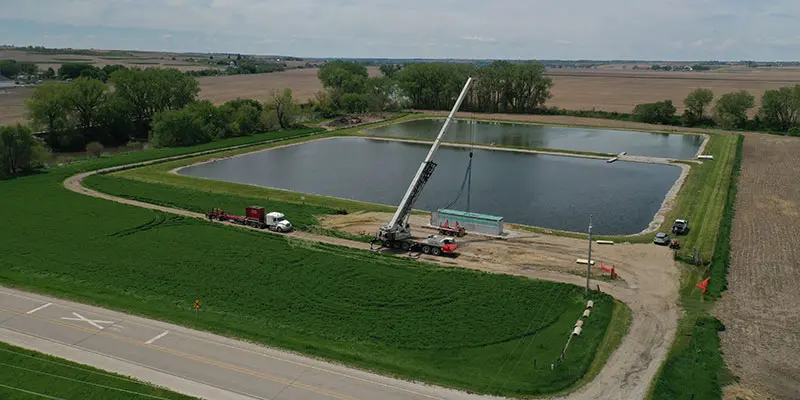
A modular wastewater treatment system installed alongside an existing lagoon can add treatment capacity while making use of existing infrastructure.
Compare Retrofit Costs and Constraints With Replacement
A retrofit only makes sense, however, if the existing plant provides a sound platform for the upgrade. Consider:
- The condition of existing infrastructure
- Available space
- Future load projections
- Installation requirements
- Potential downtime
- Amount of additional treatment capacity from the upgrade
A retrofit that barely reaches the new discharge limit might offer poor long-term value, so it is worth weighing anticipated growth against the retrofit's added capacity. A phased wastewater expansion strategy can also allow facilities to add treatment capacity as requirements or flows increase. Replacement may be more practical when major assets have deteriorated, or the existing configuration cannot be upgraded to meet projected future treatment requirements.
Build for This Permit and the Next
Facilities may also need to consider future nutrient requirements, particularly in watersheds where nitrogen and phosphorus are already a water quality concern. Requirements and timelines vary by state, watershed, receiving water, and permit.
A tighter wastewater permit might call for a change to a plant, not necessarily its replacement. Contact Fluence for help evaluating your treatment system and identifying retrofit or upgrade options designed to address the compliance gap while making use of viable existing infrastructure.


