
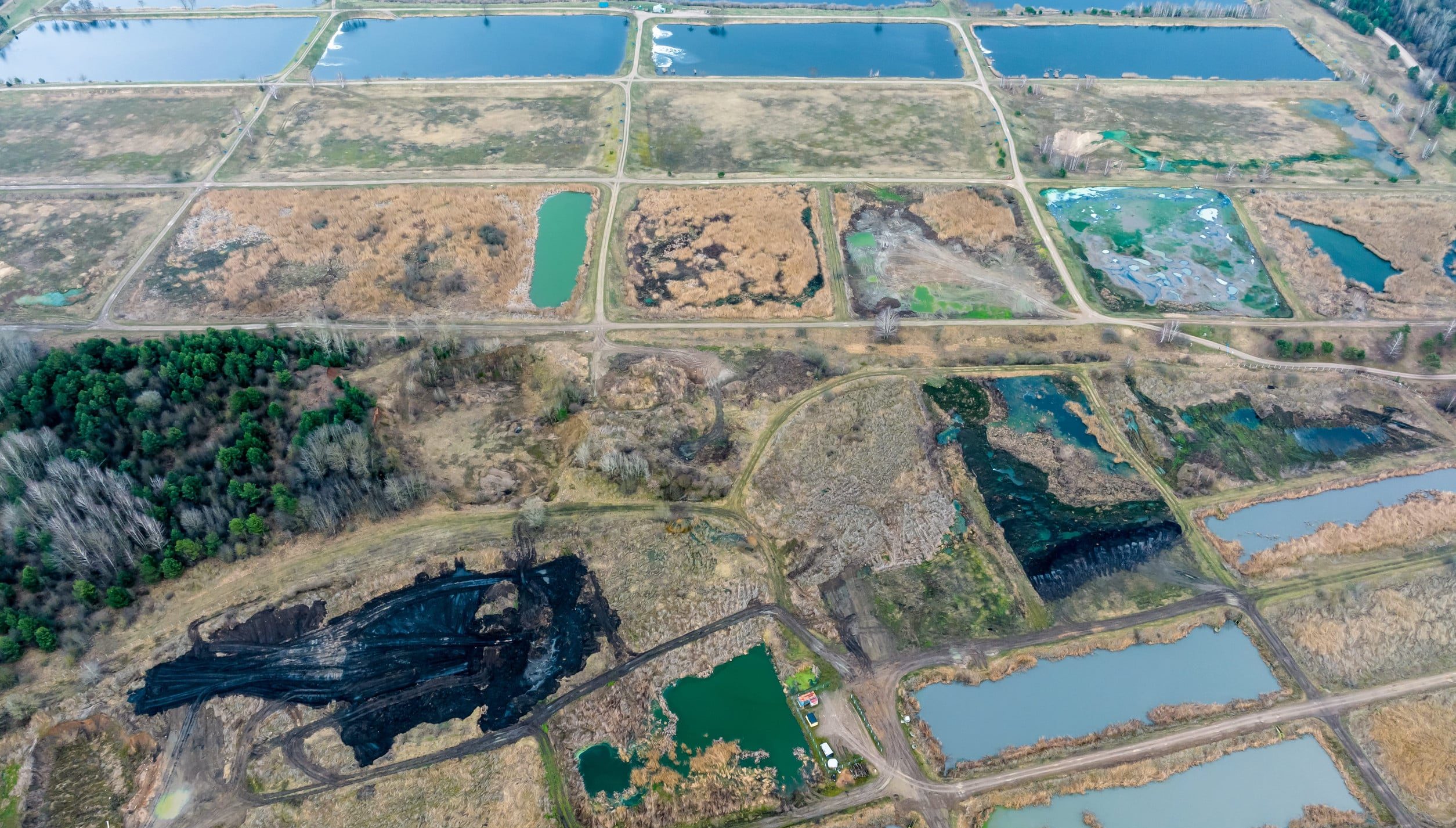
For communities operating lagoon wastewater treatment systems, it can be especially difficult to meet ever-stricter effluent limits.
Pilot project demonstrated MABR’s ability to economically enhance wastewater treatment in a lagoon system
When it comes to wastewater treatment, many municipalities and water authorities are facing increasingly stringent discharge limits for a variety of pollutants, including ammonia. Many, too, are looking for cost-effective ways to upgrade aging treatment systems. For communities operating lagoon systems, meeting these requirements can be especially difficult since upgrades often require significant capital investment and lengthy construction schedules.
During a recent Fluence webinar, sales managers Dustin Alleman and Ryan Petronella explored how membrane aerated biofilm reactor (MABR) technology addresses these challenges. By combining targeted oxygen transfer with a modular treatment design, MABR delivers reliable ammonia removal, lower energy consumption, and the flexibility to upgrade existing infrastructure.
A Different Approach to Biological Treatment
Unlike many water treatment technologies that use membranes as filters, in MABR, membranes provide a surface on which a nitrifying biofilm naturally develops. Air is delivered through the membrane at very low pressure, allowing oxygen to diffuse directly to the biofilm responsible for nitrification, which converts ammonia into nitrate.
This targeted oxygen delivery makes the biological process significantly more efficient than processes that use conventional aeration. Rather than introducing large volumes of air into an entire basin, oxygen is delivered precisely where it’s needed, reducing energy use while creating stable conditions for nitrifying bacteria.
The biofilm remains at a controlled thickness due to biological limitations, eliminating the need for routine membrane cleaning while providing an expected membrane service life of 20 years.
Improving Efficiency While Simplifying Operations
Conventional aeration is one of the largest energy consumers in biological wastewater treatment. Because MABR transfers oxygen directly through the membrane, less energy is required to achieve effective treatment.
Combined with Fluence’s patented low dissolved oxygen (low DO) process, the technology also removes internal recirculation requirements while maintaining nitrification and denitrification within the same treatment train.
Beyond energy savings, operators benefit from a simplified process with fewer control points and minimal maintenance requirements. The modular design also allows systems to be factory-built and delivered as complete treatment units, reducing on-site construction time and simplifying future expansion.
Demonstrating Performance in Dow City, Iowa
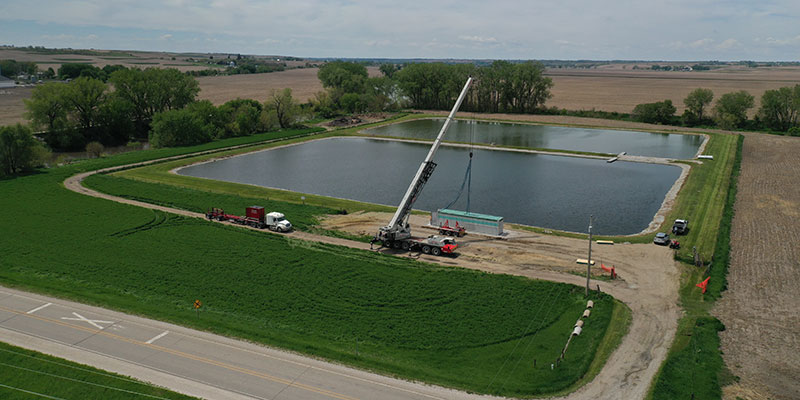
Fluence’s Aspiral™ M2 Plus system was installed at Dow City, Iowa, to upgrade an existing wastewater lagoon and improve ammonia removal while minimizing construction time.
During the webinar, the presenters shared results from Fluence’s pilot installation in Dow City, Iowa, where an Aspiral™ M2 Plus system was evaluated as an upgrade for an existing municipal lagoon.
Like many communities across Iowa, Dow City has relied on lagoons originally designed to remove biochemical oxygen demand (BOD) and total suspended solids (TSS). With ammonia regulations becoming more stringent, the city needed an affordable solution that could improve treatment performance without replacing the entire facility.
One of the first advantages demonstrated by the project was installation speed. Construction began in late March, and by early June the modular treatment system was installed, connected, and treating wastewater.
Reliable Ammonia Removal During Winter
Cold weather is one of the greatest challenges for biological ammonia removal, particularly in lagoon systems where treatment performance often declines as water temperatures decrease.
Throughout the Dow City pilot, wastewater temperatures dropped to approximately 36 to 37 F (2 to 3 C), with the lagoon covered by ice during the winter months. Even under these conditions, the MABR system consistently removed ammonia while maintaining stable biology.
The pilot also demonstrated the flexibility of the technology under changing operating conditions. Initially, the system treated lagoon effluent and operated as a biofilm process. Later, the influent source was modified to intercept stronger raw wastewater before it mixed throughout the lagoon, allowing the system to transition to an activated sludge process while continuing to achieve reliable ammonia removal.
More Than Nutrient Removal
While the primary objective of the pilot was to evaluate ammonia removal, the system also demonstrated strong overall biological treatment performance. Laboratory results showed consistent removal of biochemical oxygen demand (BOD), total nitrogen, and phosphorus through enhanced biological phosphorus removal (EBPR).
The project also highlighted the operational efficiency of modular MABR technology. The pilot system, which treated approximately 30,000 GPD, averaged about $5 per day in electricity costs, remaining below $10 per day even during winter operation when the equipment building required heating.
A Practical Path for Lagoon Upgrades
As nutrient regulations continue to evolve, municipalities need solutions that balance performance, affordability, and ease of implementation. The Dow City pilot demonstrated how modular MABR technology can provide reliable ammonia removal during cold-weather operation while reducing both capital and operating costs.
For communities looking to upgrade existing lagoon systems without constructing entirely new treatment facilities, modular MABR offers a practical approach that combines energy efficiency, rapid deployment, and proven biological performance. Contact the experts at Fluence to learn more about how these treatment advances can benefit you.


