
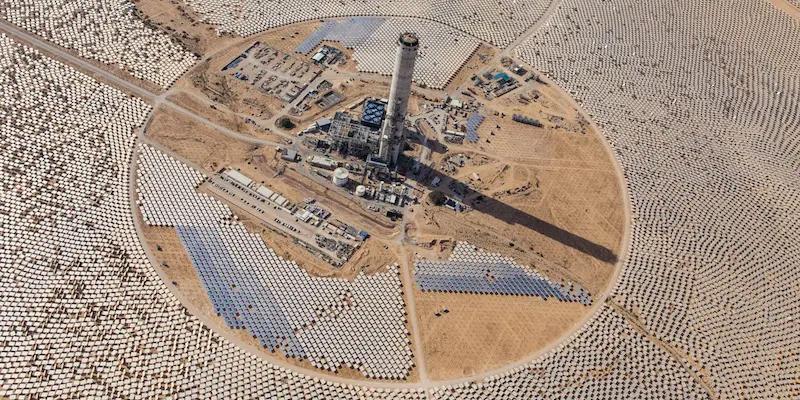
Water-intensive industries are increasingly investing in on-site treatment, reuse, and alternative water sources to strengthen long-term water security and reduce reliance on constrained municipal supplies.
Manufacturers are discovering that water availability—not energy or labor—is increasingly determining where they can expand production
For manufacturers, water availability is no longer merely a background utility. As drought pressure, aging infrastructure, and new industrial demand converge, more facilities are looking for greater control over their water supply and finding it through on-site treatment, reuse, desalination, and Water Management Services or leasing models.
Not all manufacturers want to disconnect from every outside system; most just want to reduce exposure to water constraints that can affect production or limit long-term planning. Water independence might mean supplemental reuse for one facility. For another, it might mean treating brackish groundwater, seawater, or process water on-site. For a remote or infrastructure-limited site, it might mean complete independence.
Water Has Become a Business Risk
By 2030, global freshwater demand is expected to outstrip supply by 40%. For manufacturers, that translates into growing business risks, including:
- Water scarcity
- Supply interruptions
- Aging or constrained municipal infrastructure
United States drinking water infrastructure includes more than two million miles of transmission and distribution lines, with many of those pipes reaching or exceeding design life. Industrial users can no longer safely assume adequate municipal capacity.
Data centers, semiconductor fabrication plants, advanced manufacturing, food and beverage plants, power generation, and heavy industry add another layer to water demand. The Environmental Protection Agency (EPA) frames water reuse as a way to help scale industry and AI-related infrastructure without straining freshwater resources.
What Water Independence Means for Manufacturers
A facility does not need to sever municipal connection to gain cost-efficient resilience.
For some plants, independence begins with diversifying sources. Groundwater, brackish water, seawater, surface water, or treated municipal effluent might become part of the supply picture. Others prioritize recovering the water already moving through the facility, typically boiler water, cooling water, microchip manufacturing water, or other on-site process streams.
Reuse lowers withdrawals from traditional sources by replacing them with nonpotable water for cooling, process support, washdown, irrigation, or other purposes. Effective planning no longer assumes water availability is guaranteed.
How Manufacturers Reduce Dependence on Municipal Supply
Water independence often comes from a combination of strategies. On-site groundwater treatment can turn a local source into process water, utility water, or potable supply. Brackish water or seawater desalination can help sites develop a dependable water source. Then, reuse systems can recover that water for a full water-cycle solution.
Where municipal systems meet some requirements but not all, water independence means options, not isolation. A plant can reduce demand, reserving municipal capacity for applications that truly require it.
Making the Strategy Practical
Today's industrial water treatment systems make water independence more flexible. Reverse osmosis, ultrafiltration, demineralization, disinfection, membrane bioreactor (MBR), membrane aerated biofilm reactor (MABR), desalination, and containerized systems can be configured to match site-specific influent conditions and required effluent quality.
Fluence NIROBOX™ enables facilities to develop new freshwater supplies from seawater or brackish water, while Aspiral™ Flex helps recover wastewater for reuse, allowing manufacturers to create a more resilient, circular water strategy.
Where Water Independence Matters Most
Semiconductor manufacturers in particular need high volumes of ultrapure water, purification, and recycling, while fabricators might manage complex streams and many wastewater grades. Data centers require significant volumes of water for cooling, while semiconductor fabs depend on ultrapure water for manufacturing. Different versions of the same problem are found in food and beverage plants, power facilities, remote campuses, resorts, and heavy industrial sites.
Case Studies in Water Independence
Manufacturers across multiple industries are already reducing dependence on traditional water supplies through Fluence technologies.
- The Tadel SA fish processing facility in Ecuador reduced reliance on tankers by reusing its wastewater for production and boiler feed processess.
- The Arcelor Mittal Tubarão steel facility in Brazil reduced dependence on stretched municipal supplies with seawater desalination.
- Coca-Cola FEMSA's Alcorta plant in Argentina recovers treated wastewater for reuse.
- The Ashalim Solar Power Plant in Israel recycles blowdown for reuse.
Planning Water Independence Around Growth
A manufacturer evaluating water independence can begin with operational questions like these:
- What water source risks could affect the facility today?
- How much will demand grow if production expands?
- Which uses require high-quality water and which could use reclaimed or nonpotable water?
- Where can process, cooling, or wastewater streams be recovered?
- Could desalination, reuse, or on-site treatment reduce pressure on municipal supply or support a project that otherwise faces capacity constraints?
A company planning a new site or an expanded production footprint needs a water strategy that accounts for water scarcity, infrastructure timing, treatment performance, operational responsibility, sustainability goals, and long-term resilience.
Talk With Fluence About Site-Specific Water Security
Fluence helps manufacturers achieve practical water independence through traditional procurement, leasing, or Water Management Services, which reduce upfront capital requirements while providing long-term operational support. Contact Fluence to explore the right water independence strategy for your facility.
Water Independence for Manufacturers FAQs
What is water independence in manufacturing?
Water independence in manufacturing refers to reducing reliance on constrained municipal water supplies through on-site treatment, water reuse, desalination, or alternative water sources.
Do manufacturers need to disconnect from municipal water to become water independent?
No. For most facilities, water independence means reducing reliance on municipal supplies rather than eliminating them. Many manufacturers combine municipal water with reuse systems, groundwater treatment, desalination, or other alternative sources to improve resilience and support future growth.
Why are manufacturers investing in water reuse?
Manufacturers invest in water reuse to recover process water, reduce freshwater withdrawals, strengthen supply resilience, and support long-term production growth.
How can manufacturers reduce reliance on municipal water?
Manufacturers can reduce reliance on municipal supplies through wastewater reuse, groundwater or brackish water treatment, cooling water recycling, desalination, and other on-site treatment strategies.
Which industries face the greatest water supply risks?
Water-intensive industries such as semiconductor manufacturing, food and beverage processing, data centers, power generation, mining, and chemicals often face the greatest water supply challenges because production depends on consistent, reliable water availability.
What technologies support industrial water independence?
Manufacturers commonly use reverse osmosis, ultrafiltration, desalination, MBR, MABR, demineralization, and water reuse systems. The right combination depends on available water sources, required water quality, wastewater characteristics, and production needs.


