
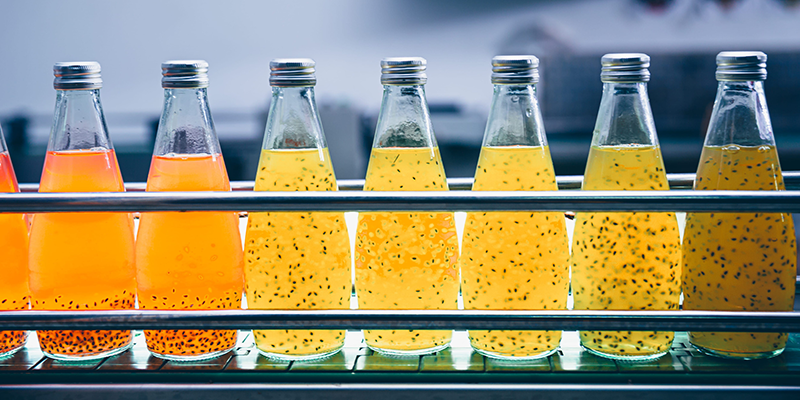
Fluence helped a beverage plant in Buenos Aires, Argentina, increase wastewater treatment capacity when its plant wasn't suited for expansion. The upgrade produced water suitable for reuse within the facility, which lowered water consumption.
When additional water allocation isn't available, manufacturers can get more from the water already entering the facility
A manufacturer may have the demand, space, and production capacity to add a new line or increase output, only to encounter a different constraint: there isn't enough water to support the expansion.
This can happen when the utility cannot provide additional water, the manufacturer has reached the limits of its permitted allocation, or tapping into a new water supply would be prohibitively expensive.
Assessing the Facility's Water Budget
Before looking for additional water sources, manufacturers need a clear picture of their existing water budget. The first step is determining where water is used. Which processes require water, how much water is needed, and what quality does each application require?
The next step is to examine where water is being discharged and which wastewater streams could be treated for reuse within the facility.
Mapping the entire water cycle, from where water enters a facility to where it is consumed, lost, treated, or discharged, can identify opportunities to recover water for reuse. It can also identify peak versus average water use and differences in water-quality requirements throughout the production process. The water budget may also reveal opportunities to reuse water from high-quality applications for uses with lower water-quality requirements, getting more use from the water already entering the facility. Not every gallon entering a facility must be potable quality. With appropriate treatment, water already used in one process may be suitable for reuse in another application.
Recovering and Reusing Water Already on Site
Process water and wastewater are potentially valuable resources that can be treated for reuse on-site. Depending on the characteristics of the water and the quality required for its next use, a treatment train may incorporate technologies such as ultrafiltration and reverse osmosis.
Once treated to the appropriate quality, recovered water can be reused for applications such as cooling tower makeup, equipment and floor washing, and other industrial processes. Higher-quality treatment can also support more demanding applications, including boiler feed water, when the treatment system is designed to meet the required water-quality specifications. By treating and reusing rather than discharging the wastewater generated on-site, manufacturers may be able to reduce freshwater demand and, depending on site-specific conditions, wastewater discharge and water-supply costs.
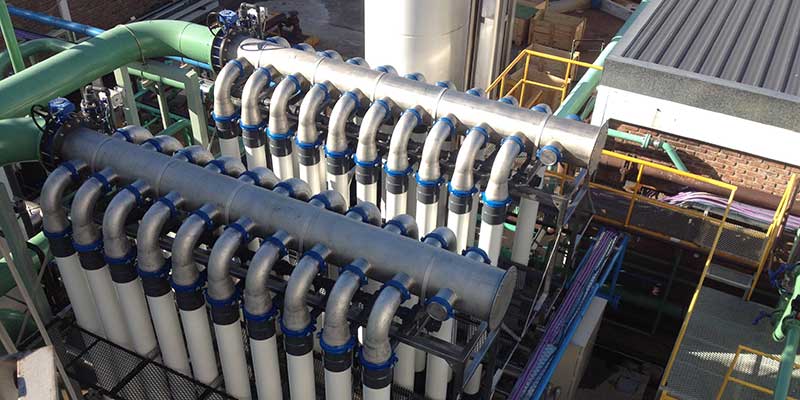
Fluence upgraded wastewater treatment capacity at a beverage bottling plant in Buenos Aires, Argentina, producing treated water suitable for reuse within the facility.
Fluence helped a beverage bottling plant in Buenos Aires, Argentina, increase wastewater treatment capacity when there was no room to expand the existing treatment plant. The upgrade produced water suitable for reuse within the facility, which lowered water consumption. Fluence used membrane bioreactor technology to increase treatment capacity within the existing footprint, producing treated wastewater suitable for reuse within the plant.
Reducing the Water Required Per Unit of Production
Recovering wastewater for reuse is one way to free up water capacity within an existing allocation. Manufacturers can also examine whether treatment improvements, higher recovery rates, process optimization, or closed-loop systems can reduce the freshwater required per unit of production. If the existing operation can produce the same output with less incoming water, that freed capacity may be available to support the new line.
Adding Treatment Capacity Without Rebuilding the System
Reuse and efficiency improvements may not address every constraint. In some cases, expansion requires additional treatment capacity or higher-quality process water rather than more raw water alone. That doesn't necessarily require rebuilding or replacing the facility's existing treatment system. Packaged and containerized systems can add treatment or reuse capacity alongside existing infrastructure, allowing manufacturers to address a specific bottleneck and expand treatment in phases as production grows. Fluence solutions for these applications include NIROBOX™ containerized water treatment systems and EcoBox™ water reuse systems. NIROBOX systems can treat freshwater, brackish water, or seawater for industrial process-water applications, while EcoBox is designed to treat industrial and other wastewater streams for reuse.
Treating Water Capacity as Part of Expansion Planning
Manufacturers planning a new production line or increased output should evaluate water availability and quality, wastewater capacity, and reuse potential early in the expansion process. A constrained freshwater supply does not necessarily rule out expansion. Identifying the constraint early gives manufacturers time to determine whether water reuse, improved recovery, additional treatment capacity, or a combination of approaches can support the planned growth.
Planning a facility expansion with limited water availability? Fluence can evaluate treatment and reuse options that help manufacturers use their existing water resources more effectively. Contact our team to discuss your facility expansion.


