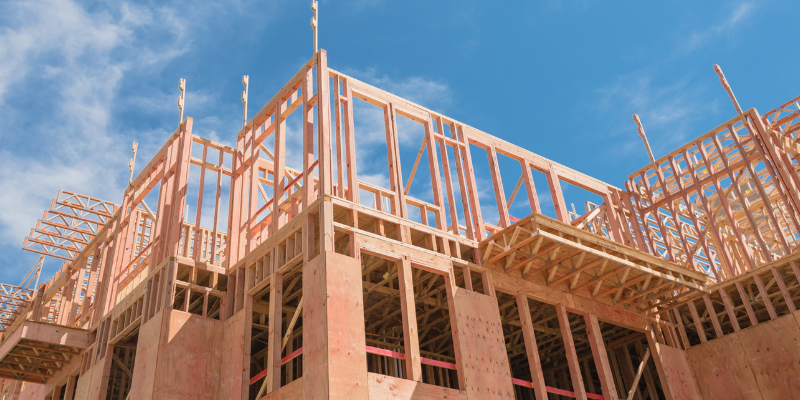
The build-to-grow approach is especially relevant when development timelines move faster than conventional infrastructure decisions.
A phased way to deliver reliable water and wastewater capacity as communities grow
Growing communities don’t reach full size overnight. Residential developments grow in phases, occupancy rises over time, and the infrastructure roadmap often has to accommodate real-world changes in schedule and funding.
“Build to grow” is a practical way of planning for that reality. It’s a phased infrastructure strategy that starts with a clear end-state plan, then deploys water or wastewater capacity in stages so early phases are supported while growth is addressed through a defined expansion path.
This approach becomes especially relevant when development timelines move faster than conventional infrastructure decisions. Traditional centralized plants are often scoped and funded as large, final buildout assets. That can create a tough choice early in a project: Build big before demand arrives, or delay service while waiting for a long-lead, full-scale solution. A build-to-grow mindset reframes that decision by treating growth as a planned sequence, supporting the community today while staying on track for what’s needed tomorrow.
Flexibility With Discipline
A big reason stakeholders like staged deployment is that it provides flexibility without losing discipline. Early phases can be supported with appropriately sized capacity, and expansion can be approached as a continuation of the original plan instead of a complete restart.
It also simplifies project communication. When you can clearly explain what’s being delivered now, how it supports initial phases, and how capacity expands as demand increases, it’s simpler to align developers, municipal partners, engineers, and community stakeholders around a shared roadmap.

Aspiral™ Flex uses modular, containerized treatment blocks that can be deployed in early phases and expanded as communities grow.
Modular containerized wastewater systems are a practical way to deliver this strategy. Instead of assuming capacity must be built out all at once, modular systems use repeatable building blocks that can be configured to meet treatment needs and expanded over time. A concrete example is Aspiral™ Flex, Fluence’s containerized wastewater treatment solution. Aspiral™ Flex is a building-block system with pre-engineered, factory-tested modules designed to support reliable treatment quality with minimal on-site labor. It’s a solution that can be customized and integrated into existing wastewater treatment designs.
For municipal and residential stakeholders, this matters because growth projects require infrastructure that is both practical and durable. Municipal partners often prioritize long-term operability and consistency. Developers often prioritize schedule certainty and aligning capital to phased buildout. A phased roadmap supported by modular solutions can help connect those priorities by enabling a stepwise approach to capacity while keeping the final outcome in view.
Commercial Considerations
Commercial models can reinforce the same staged logic. Many early-phase communities are sensitive to upfront capital requirements, so financing and delivery options such as leasing or BOO/BOOT contracts can be relevant when demand is ramping rather than fixed. Fluence offers leasing and full-service options across water, wastewater, and water reuse treatment projects.
The same modular mindset can extend beyond wastewater. Some communities face potable supply or water quality challenges alongside wastewater needs, so packaged, containerized water treatment can complement a phased infrastructure strategy when speed, footprint, and flexible deployment are important. Fluence’s NIROBOX™ platform is a flexible, containerized family of water treatment solutions ideal for use in municipal, industrial, and commercial markets.
In practice, build to grow is disciplined phasing:
- Plan for the destination
- Deploy what’s needed for the earliest stages
- Expand in a structured way as the community fills in.
For municipal and residential projects, Fluence’s modular solutions provide a tangible pathway to support that staged approach while maintaining a clear infrastructure plan from first occupancy to full buildout. Contact Fluence to discuss how a build-to-grow strategy can support your community’s growth and compliance goals.


