
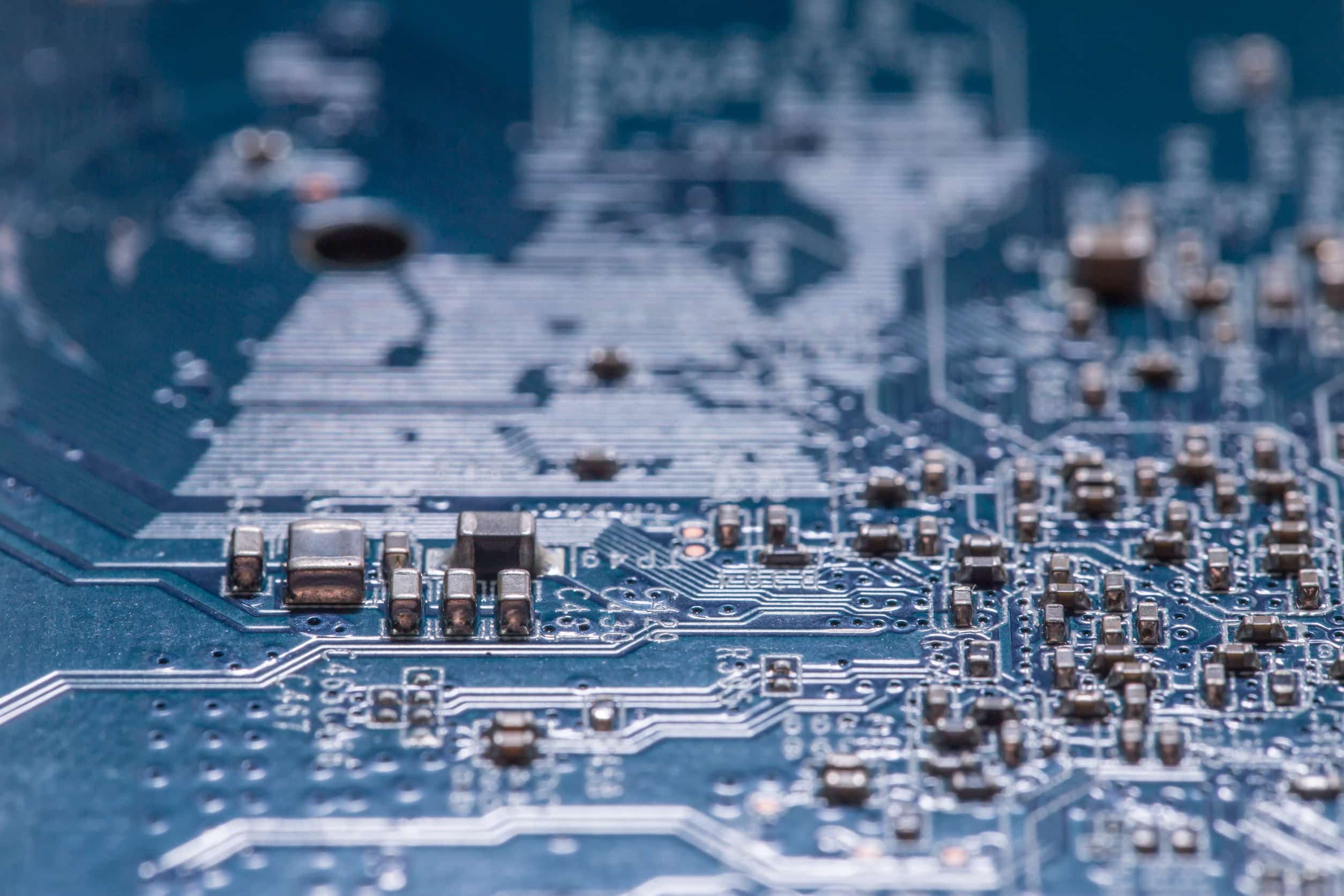
Water is a critical process input in many high-tech enterprises, including AI data centers and chip manufacturing.
In high tech, reliable water reuse is becoming an ever more essential factor in scaling operations
Artificial intelligence is becoming an increasingly important part of daily life, but there are factors that could constrain AI’s ability to scale. Some of the more visible limiting factors include electrical demand, semiconductor availability, and the need for advanced cooling systems. However, another challenge is becoming increasingly important: the efficiency and stability of water reuse systems.
In semiconductor fabrication and AI-driven data centers, water is not a secondary utility. It is a critical process input. High-purity and ultrapure water are required for chip manufacturing, while large volumes of consistently treated water are used for cooling high-density compute environments. Even though progress has been made in securing supply and improving treatment technologies, reuse systems themselves can influence the pace of progress.
Water Challenges in High Tech
In advanced facilities, water is often circulated through multiple stages of use, including cooling loops, rinsing processes, and auxiliary systems. It is then treated and reused where possible. The challenge is that each cycle introduces variability. Trace contaminants accumulate, making it more difficult to maintain consistent quality over time. What appears to be a closed-loop system is actually a tightly managed balance between treatment performance and strict quality thresholds.
This is especially evident in the high-purity water systems used in semiconductor manufacturing. Technologies such as reverse osmosis, electrodeionization, and advanced membrane filtration are highly effective at producing ultrapure water from incoming sources.
However, recovery and reuse rates are increasingly affected by the sensitivity of downstream processes. Even small deviations in water quality can limit how much water can safely be recycled back into production systems. As a result, reuse efficiency tends to plateau, not because treatment is insufficient, but because process tolerance is extremely narrow.
Wastewater streams in these facilities are also becoming more difficult to manage. As water cycles through cooling and process systems, it accumulates a mix of dissolved solids, organic residues, and treatment by-products. These streams require increasingly advanced stabilization before they can be reused. This is where integrated treatment approaches become critical.
Effective, Scalable Solutions
Fluence addresses this challenge through containerized and decentralized systems that integrate multiple treatment stages into compact treatment configurations. Technologies such as membrane bioreactors, ultrafiltration, and advanced biological treatment systems are designed to stabilize variable wastewater streams and prepare them for reuse or further polishing. These systems are often deployed in containerized or skid-mounted formats, allowing facilities to adapt water treatment capacity as demand evolves.
In addition, Fluence’s approach to resource recovery emphasizes extending the life of water within industrial systems. By integrating biological treatment with membrane-based polishing, facilities can improve overall water recovery while reducing reliance on freshwater intake. In some configurations, treated effluent can be reused for cooling or noncritical process applications, helping close the loop within the facility.
Sustaining Water Quality
The broader implication for AI infrastructure is that water availability is no longer the only constraint. The ability to maintain stable reuse cycles is becoming equally important. As systems approach their practical limits, the challenge shifts from simply producing high-quality water to sustaining that quality across multiple reuse loops without performance degradation.
This changes how water systems must be designed. Instead of treating intake, process, and discharge as separate stages, they need to function as a continuous system. Fluence’s integrated treatment and reuse technologies reflect this shift by focusing on systemwide efficiency rather than isolated treatment steps.
Ultimately, the future scalability of AI may depend less on how much water can be sourced and more on how effectively it can be reused within closed, controlled systems. The ability to extend those cycles safely and reliably is becoming one of the most important enablers of continued growth in high-tech infrastructure.
How can this affect your enterprise? Contact Fluence to learn how advanced water reuse and ultrapure water systems can support reliable growth in AI infrastructure and semiconductor manufacturing.


