Industrial RO concentrate and wastewater discharges face increasing scrutiny for dissolved solids, nutrients, and persistent contaminants. Fluence addresses these challenges through integrated system design and Water Management Services (WMS).
RO is only one step in the treatment train
Reverse osmosis (RO) is a cornerstone of industrial water treatment because it reliably delivers high-quality water across demanding applications, but it does not complete the water management cycle on its own. RO concentrates dissolved solids, salts, metals, and other constituents into a smaller volume that must be managed.
In industrial RO systems:
- Residuals are the materials left after a treatment process.
- Concentrate is the liquid stream containing dissolved solids removed by reverse osmosis.
- Brine is a highly saline concentrate, often produced during desalination or high-recovery RO processes.
As facilities pursue higher recovery and expanded reuse, residuals management has become a defining design constraint. High-strength RO brines are managed through established pathways, including regulated surface discharge, discharge to publicly owned treatment works, underground injection, or evaporation-based approaches, as outlined in permitting pathways for reuse projects. Each pathway imposes distinct technical, permitting, and long-term operational requirements.
Because concentrate and residuals are inherent outcomes of industrial RO systems, planning for these streams now shapes system configuration, recovery targets, and technology selection. The focus extends beyond water quality specifications to ensure that the full treatment system operates reliably within site constraints, regulatory expectations, and cost structures. This shift explains why Fluence is increasingly engaged earlier in the design process, working with operators to plan integrated systems that account for residuals from the start.
Concentrate Management Is a Design Constraint
Once RO is selected, concentrate management options narrow based on site conditions, regulatory frameworks, and water chemistry. In practice, facilities rely on a small set of pathways, including surface discharge under NPDES permits, discharge to public treatment works, underground injection, evaporation ponds, or thermal and spray evaporation systems.
In coastal regions, outfalls can be routed to less sensitive locations, and diffusers can dilute brine to protect aquatic ecosystems. In hot, arid regions far inland where brackish aquifers supply source water, however, evaporation may make more sense. Each option imposes clear limits that influence achievable recovery and system architecture.
Across industrial sectors, discharge standards increasingly drive wastewater system design rather than serving as a downstream compliance check.
In response, Fluence integrates disposal constraints into the early stages of RO system design to ensure long-term operability and regulatory compliance. Recovery rates, staging strategies, and downstream technologies are selected based on site conditions, permitting requirements, and sustainable lifecycle performance.
The Hidden Costs of "After RO" Decisions
Residuals handling decisions have a lasting influence on the total cost of ownership. High total dissolved solids, variable chemistry, and scaling potential complicate concentrate treatment and drive energy use, chemical consumption, and solids handling requirements. These factors shape technology selection and long-term operating costs.
Industrial wastewater discharges face increasing scrutiny for toxic, persistent, and bioaccumulative constituents, along with nutrients and dissolved solids, a trend reflected in recent industry reporting on tightening effluent limits and compliance timelines. Discharge standards and compliance timelines can materially affect industrial operating strategies and capital planning.
These dynamics explain Fluence's emphasis on right-sized containerized system designs. Overdesigning RO and downstream residuals treatment to maximize recovery can lock in facilities to higher capital and operating costs without improving resilience or long-term compliance outcomes.
Designing RO Systems With Residuals in Mind
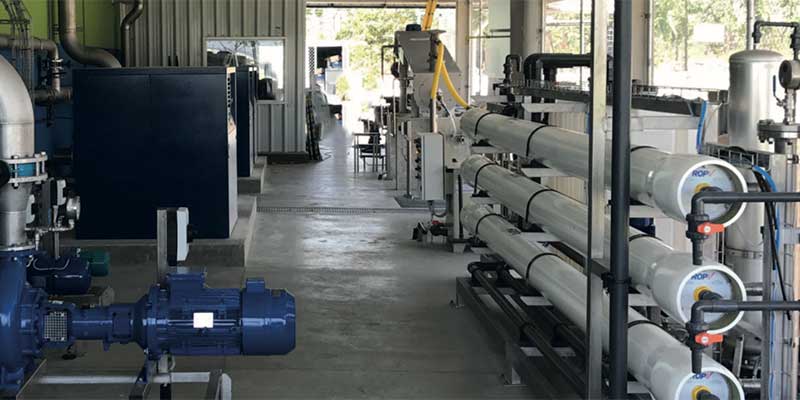
Containerized industrial water treatment system supporting RO concentrate reduction and reuse applications.
Effective residuals management begins with system-level integration. Pretreatment, staged recovery, and targeted polishing can reduce concentrate volumes and improve treatability, but only when aligned with realistic disposal or reuse pathways. Process configurations, economics, and environmental tradeoffs vary widely across membrane concentrate treatment and zero liquid discharge (ZLD) systems.
Containerized and decentralized architectures help manage this uncertainty. Rather than committing to a single fixed end state, facilities can adjust recovery levels, add treatment stages, or shift disposal strategies as conditions change. At the extreme, ZLD systems that include membrane processes can eliminate liquid discharges while converting residuals into manageable solids.
Reducing Disposal Through Reuse and System Flexibility
As recovery increases, concentrate handling and infrastructure constraints become central design drivers, particularly where discharge pathways are limited or uncertain. In reuse-driven systems, these constraints frequently define feasible configurations more than treatment performance alone.
System flexibility is therefore critical. Modular architectures allow facilities to adjust recovery, add treatment stages, or redirect concentrate streams when regulations, production demands, and water quality evolve. This approach reduces reliance on single end state disposal solutions and preserves optionality over the life of the asset.
Fluence supports this flexibility through its containerized RO systems and treatment platforms. Treatment, membrane, polishing, and reuse components can be combined, staged, or expanded to align recovery targets with real disposal limits.
This allows operators to align RO recovery, reuse, and residuals management with real disposal limits while avoiding premature commitment to fixed system configurations.
Residuals Strategy Is Core to Industrial Water Planning
RO remains highly effective for meeting industrial water quality and reuse objectives, but it is technically demanding. Risk rarely sits at the membrane alone. It emerges across operations, residuals management, and regulatory accountability.
Fluence addresses these challenges through integrated system design and its Water Management Services (WMS) model. Through WMS, Fluence delivers complete treatment solutions supported by long-term operations, maintenance, and regulatory compliance services under performance-based agreements. This approach helps industrial operators achieve reliable RO and reuse performance while reducing operational complexity and aligning costs with delivered results.
To learn how Fluence’s RO solutions and Water Management Services can support your facility, contact our team of water professionals.
Frequently Asked Questions About RO Concentrate and Brine Management
What is RO concentrate in industrial water treatment?
RO concentrate is the liquid waste stream produced during reverse osmosis. It contains the dissolved salts, metals, and other contaminants removed from the feedwater. As recovery increases, concentrate becomes more concentrated and requires careful disposal or further treatment.
What is the difference between RO concentrate and brine?
All brine is concentrate, but not all concentrate is brine. Brine refers specifically to high-salinity concentrate streams, typically generated in desalination or high-recovery systems. In industrial applications, concentrate may contain a mix of dissolved solids, nutrients, metals, or process chemicals depending on the source water.
How is industrial RO concentrate disposed of?
Common disposal pathways include surface discharge under permit, discharge to a publicly owned treatment works (POTW), underground injection, evaporation ponds, thermal evaporation, or zero liquid discharge (ZLD) systems. The viable option depends on site conditions, regulatory requirements, and water chemistry.
What factors determine RO recovery rates?
Recovery rates are limited by scaling potential, membrane performance, disposal constraints, and regulatory discharge limits. In many industrial facilities, concentrate disposal capacity — not membrane capability — ultimately determines achievable recovery.
What is zero liquid discharge (ZLD)?
Zero liquid discharge (ZLD) is a treatment approach that eliminates liquid effluent by converting concentrate into solid waste for disposal. ZLD systems typically combine membrane processes with evaporation or crystallization technologies. They are used where discharge is restricted or water reuse is critical.
Why should concentrate management be considered early in system design?
Concentrate handling affects capital cost, operating cost, compliance risk, and long-term flexibility. Designing around disposal limits from the outset helps avoid overbuilding recovery systems that cannot be permitted or economically sustained.


