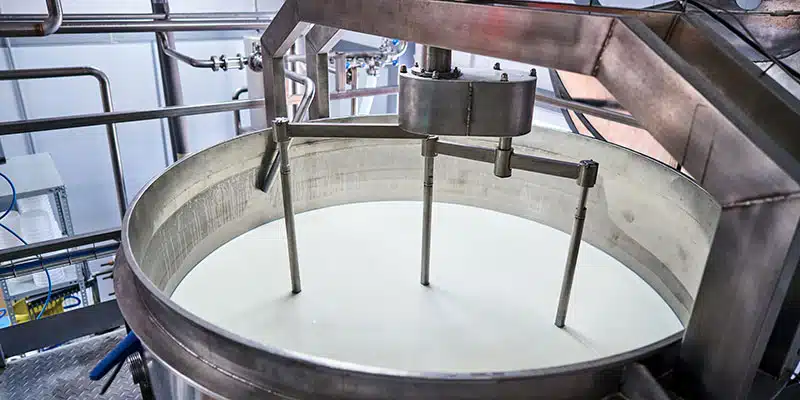
Dairy byproducts such as whey, buttermilk, and filtration permeates are well-suited for anaerobic digestion, and yields can be further boosted with recuperative thickening.
Recuperative thickening, paired with anaerobic digestion, increases active biomass concentration, strengthening both performance and operational resilience
In today’s dairy processing industry, managing high-strength organic waste streams efficiently while capturing value from them is both an environmental necessity and an economic opportunity. Traditional wastewater treatment approaches often view effluents such as whey and cheese-processing wastewater as liabilities, but advances in anaerobic digestion and recuperative thickening are helping dairy operations turn waste into renewable energy and nutrient-rich byproducts.
Why Anaerobic Digestion Works for Dairy
At its core, anaerobic digestion is a biological waste-to-energy process where microbes break down organic matter without oxygen, producing biogas — a methane-rich renewable fuel — and stabilized digestate solids.
Dairy byproducts such as whey, hot whey, buttermilk, and filtration permeates are particularly well-suited for digestion because they are high in organic content and readily biodegradable, allowing for efficient and consistent biogas production.
Anaerobic digestion offers several key advantages for dairy operations, including on-site biogas production, reduced disposal costs through volatile solids reduction, and the generation of agronomically valuable digestate. It can also support lower greenhouse gas emissions than conventional treatment and disposal methods and, in some cases, enable eligibility for energy-related incentives.
However, in real-world dairy operations, many systems struggle to handle variable dairy waste streams with high levels of fat and suspended solids. These conditions can lead to unstable biogas production, inefficient solids handling, and reduced overall process stability.
What Is Recuperative Thickening?
Recuperative thickening is a retrofit designed to improve microbial biomass control within existing anaerobic digesters.
The process works by separating digestate solids from liquid using a high-efficiency separation step, typically dissolved air flotation (DAF). The concentrated biomass, rich in active microbes and organic matter, is returned to the digester, while excess material is removed for dewatering or further treatment. This creates a controlled internal loop that also improves management of solids retention time (SRT).
By continuously recycling active biomass, the system increases microbial concentration inside the digester and improves contact between microbes and substrate. This leads to more stable digestion and more consistent biogas production. It also provides better control of key stability parameters such as alkalinity, volatile fatty acids (VFAs), and temperature.
In some configurations, recuperative thickening can also be integrated with side-stream nutrient recovery systems such as Fluence’s PHOS-PURE struvite recovery technology, further enhancing overall plant stability.
Benefits for Dairy Operations
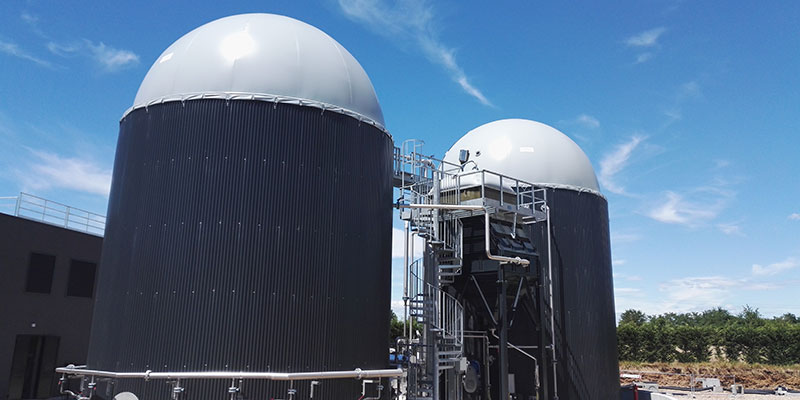
Anaerobic digestion systems convert dairy waste into renewable biogas while improving treatment efficiency and reducing disposal costs.
When paired with anaerobic digestion, recuperative thickening strengthens both performance and operational resilience.
By increasing active biomass concentration, digesters can accept higher organic loading rates without expanding tank volume, often doubling or tripling loading capacity. This improves treatment efficiency while maximizing the value extracted from existing infrastructure.
Operationally, the recirculation of active biomass helps smooth fluctuations in volatile fatty acids and supports steady methane production, even under variable feed conditions. It also reduces the likelihood of process upsets such as over-acidification or ammonia inhibition by improving biological balance and stabilizing SRT.
From a solids management perspective, improved separation upstream enhances downstream dewatering performance and reduces hauling and disposal costs.
Real-World Example: Dairy Whey to Biogas
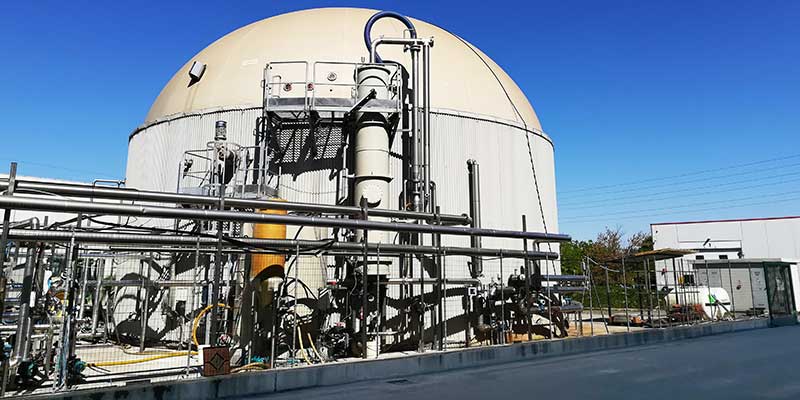
Anaerobic digestion plant treating dairy whey (scotta) to produce renewable biogas and stabilize high-strength waste streams.
Soligo, an Italian dairy cooperative in Treviso, selected Fluence to design and deliver a biogas plant to treat and dispose of hot whey (scotta), a lactose-rich byproduct of ricotta cheese production. After becoming familiar with the technology used at Moro, another Italian dairy plant, Soligo visited a Fluence-built reference facility to observe system performance under similar operating conditions.
Following that evaluation, the client selected Fluence’s solution for its ability to deliver reliable performance and effective waste stabilization. The system was designed based on Fluence’s recuperative thickening principle, where biomass recirculation increases microbial concentration and enables efficient treatment of lower-strength substrates.
The system performs particularly well with low-COD substrates (COD < 100,000 mg/L), where conventional configurations often require significantly larger digester volumes to prevent acidification and maintain stable performance. In practice, this approach supports stable operation even with liquid or low-solids substrates, including those with dry matter content as low as 2%. It also improves biological activity throughout the system and enhances stabilization of the final digestate.
This project highlights the effectiveness of anaerobic digestion in managing industrial dairy waste streams and demonstrates how biological systems can be engineered for high reliability under real-world conditions.
Integrating Recuperative Thickening
At Soligo, the integration of recuperative thickening improves biomass control and process stability, enabling efficient treatment of low-strength, liquid dairy waste streams while reducing overall reactor volume.
This approach increases microbial concentration through biomass recirculation, supporting consistent biological activity and improved digestate stabilization. When applied in anaerobic digestion systems, it can increase methane yield per unit of waste, reduce the volume of residual solids requiring downstream treatment, and lower overall operating costs and energy demand.
Value-Added Solutions
As the dairy industry continues to reduce emissions while extracting more value from waste, anaerobic digestion and recuperative thickening provide practical, value-added solutions. Together, they convert waste into renewable energy and useful byproducts while improving process stability and treatment efficiency.
For dairy operations, the result is a system that reduces costs, strengthens environmental performance, and unlocks long-term operational value. For dairy processors looking to improve digester stability, increase biogas output, or get more value from existing infrastructure, Fluence can help evaluate the right path forward.


