
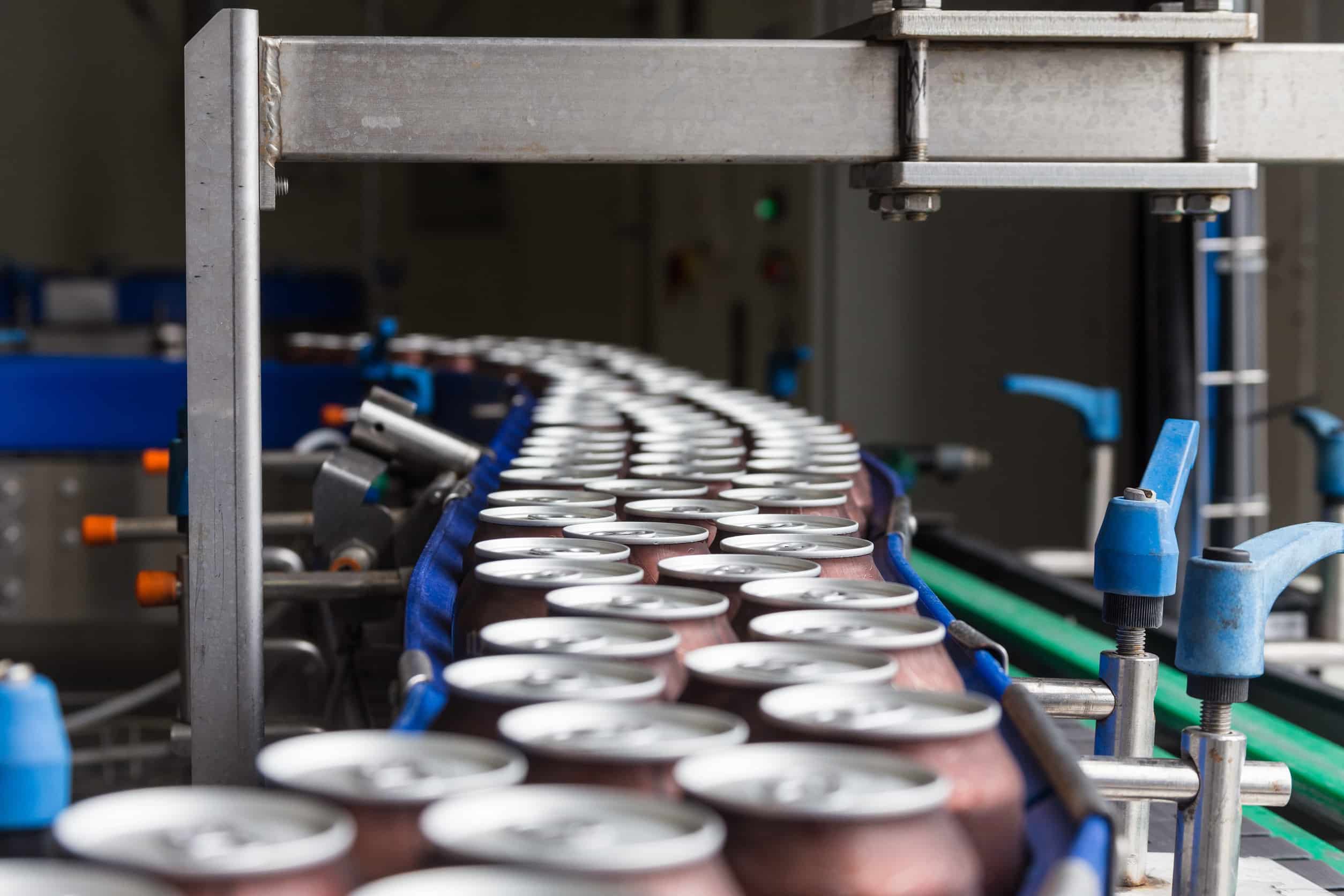
For food and beverage manufacturers, nutrient removal from wastewater is not just an environmental sustainability issue but also a compliance and cost-management concern.
Producers can reduce nitrogen and phosphorus efficiently while saving energy and maintaining compliance
Stricter wastewater discharge regulations are increasing pressure on food and beverage producers. As nutrient limits become more aggressive in freshwater and coastal ecosystems, facilities must adopt treatment strategies that lower nutrient loads without significantly increasing energy use or operating costs.
Nutrient Discharge Is Becoming a Bigger Issue
Nitrogen and phosphorus are commonly found in food and beverage wastewater. Wastewater generated by breweries, dairy beverage processors, and many beverage manufacturing facilities can contain high concentrations of organic matter, nitrogen, phosphorus, sugars, yeast, and cleaning product residue. Nutrient concentrations can vary significantly depending on the production process and seasonality.
When nutrients are discharged into waterways, they fuel dense algal blooms that impair water quality. As algae die and decompose, oxygen levels in the water drop in a process associated with eutrophication. Low oxygen levels can kill fish and other aquatic life and, in extreme cases, lead to dead zones where no organisms can survive.
With growing concern over the environmental impact of nutrient loading, stricter discharge permits are being enforced. As a result, many publicly owned treatment works have begun imposing stricter local discharge limits with surcharges for high nutrient loads. In some areas, industrial producers are also facing tighter direct discharge permits.
For food and beverage manufacturers, nutrient removal is not just an environmental sustainability issue but also a compliance and cost-management concern.
Where Traditional Treatment Approaches Fall Short
Many beverage facilities still rely on conventional wastewater treatment systems that incorporate processes such as basic aerobic treatment, lagoon systems, or conventional activated sludge. While these approaches can be effective at reducing the organic load, they have limitations.
One of the major drawbacks is the energy demand required for treatment. Aeration is generally the most energy-intensive process in biological wastewater treatment, and conventional systems consume significant amounts of energy to maintain the dissolved oxygen levels required to sustain colonies of nitrifying bacteria.
Conventional systems with large treatment basins or lagoons also require large physical footprints, which might make them impractical for some facilities.
These systems typically are designed for more consistent influent conditions and often have problems handling variable loads. Production swings during harvest season can overwhelm treatment systems, resulting in inconsistent performance.
While conventional systems can remove nutrients, the high energy consumption, increased chemical dosing, and close oversight can significantly raise long-term operating costs, making more efficient and flexible solutions increasingly important.
These operational challenges are driving increased interest in advanced biological treatment technologies designed to improve efficiency while maintaining stable nutrient removal performance.
Strategies for Reducing Nitrogen and Phosphorus Efficiently
Reducing nutrient levels in effluent efficiently requires a combination of biological treatment with process optimization and careful system design.
Biological Nitrogen Removal
Biological nitrogen removal includes nitrification followed by denitrification. Aerobic bacteria convert ammonia into nitrates in an oxygen-rich (aerobic) environment. This is followed by denitrification, where anaerobic bacteria convert the nitrates into nitrogen gas in an oxygen-free (anoxic) environment. The nitrogen gas dissipates into the surrounding air, removing the nitrogen from the waste stream.
Conventional systems typically require substantial energy consumption and careful oxygen control to ensure sufficient aeration to support the colonies of bacteria responsible for nitrification. For facilities with fluctuating loads, the key is maintaining optimal, reliable performance without the excessively high energy demands of aeration.
Phosphorus Removal
Phosphorus can be removed by chemical precipitation or using phosphate-accumulating organisms (PAOs).
With chemical precipitation, additives such as aluminum sulfate (alum) or ferric chloride are placed in wastewater. These chemicals bind with phosphorus to form insoluble compounds that settle to the bottom, where they are removed with sludge. While this method is effective, the need for chemical additives increases operating costs and generates sludge that must be managed.
Biological phosphorus removal, on the other hand, utilizes PAOs that absorb phosphorus. However, to maintain consistent performance, biological treatment systems require stable operating conditions and careful process management.
Pretreatment and Process Optimization
Balancing loads before biological treatment can play an important role in stabilizing nutrient removal and maintaining a consistently high performance. Managing variability in influent improves process stability and allows downstream treatment to operate more efficiently, helping facilities maintain compliance while minimizing energy and chemical consumption.
Nutrient management is also becoming increasingly important for facilities that process digestate streams from anaerobic digestion systems. While digestion can reduce organic loading and generate renewable energy, the resulting liquid streams may still contain elevated nitrogen and phosphorus concentrations that require additional treatment before discharge or reuse.
Modern Systems Improve Efficiency and Control
Food and beverage manufacturers are increasingly turning to advanced biological treatment technologies, such as membrane aerated biofilm reactors (MABRs), which offer improved nutrient removal without the high operating expenses.
MABR systems deliver oxygen directly to biofilms that form on the surface of a membrane through pores (passive aeration) rather than relying on conventional bubble aeration. This significantly lowers aeration energy demand while supporting simultaneous nitrification and denitrification within the same tank, which also reduces the footprint required to support both processes. These systems offer more stable treatment and can better handle the fluctuating loads common in breweries, dairy beverage processing, and other food and beverage manufacturing operations where nutrient removal requirements are becoming more stringent.
MABR technology can be incorporated into modular and containerized treatment systems, offering rapid deployment and the flexibility to scale in line with production growth. Capacity can be added incrementally as production increases simply by adding treatment modules, alleviating the need for investing in oversized infrastructure. The compact design of modular MABR systems makes them particularly valuable for space-constrained sites.
Advanced biological treatment systems such as MABR can often be integrated into water reuse or polishing systems to support broader sustainability and water management goals. The goal is lower operating costs, a smaller physical footprint, and meeting compliance requirements more consistently.
Balancing Compliance, Cost, and Long-Term Flexibility
There is no one-size-fits-all approach to nutrient removal in food and beverage wastewater treatment. The right solution depends on a facility's discharge requirements, production variability, available space, operational resources, and growth plans. Some facilities might need only ammonia reduction, while others have much stricter limits on total nitrogen or phosphorus.
For some producers, upgrading an existing treatment system might be enough to improve performance and maintain compliance. Others benefit from adding modular treatment capacity or a phased installation that allows capacity to expand in line with production growth.
Whichever approach is taken, it's important to design treatment systems that can respond to changing operational demands. Systems should be able to accommodate seasonal fluctuations in production, evolving discharge regulations, and future growth while maintaining operational cost efficiency. These planning decisions can be just as important as the treatment technology itself. Facilities that prioritize scalability, operational simplicity, and energy efficiency are better positioned to adapt later without major disruptions or costly overhauls.
FAQs
What causes high nutrient levels in beverage wastewater?
Organic materials, proteins, yeast, cleaning chemicals, and production residues can contribute to elevated nitrogen and phosphorus levels in food and beverage wastewater. Nutrient concentrations vary significantly depending on the production process.
How are nitrogen and phosphorus removed from wastewater?
Nitrogen is typically removed biologically through nitrification and denitrification, while phosphorus removal might involve chemical precipitation or biological processes.
Do all beverage producers require nutrient removal?
Not necessarily. Treatment requirements depend on wastewater characteristics, local discharge permits, and whether wastewater is sent to a municipal treatment plant or discharged directly. Some beverage waste streams contain significant nutrient loads that require removal, while others may be nutrient-limited and require different treatment approaches.
How can facilities reduce nitrogen efficiently without increasing energy costs?
Advanced biological treatment systems such as MABR can reduce aeration energy demand while maintaining effective nitrogen removal performance.
Contact Fluence to learn how our advanced treatment solutions are helping the food and beverage industry remove nutrient loads efficiently, meet compliance, and lower energy consumption.


