
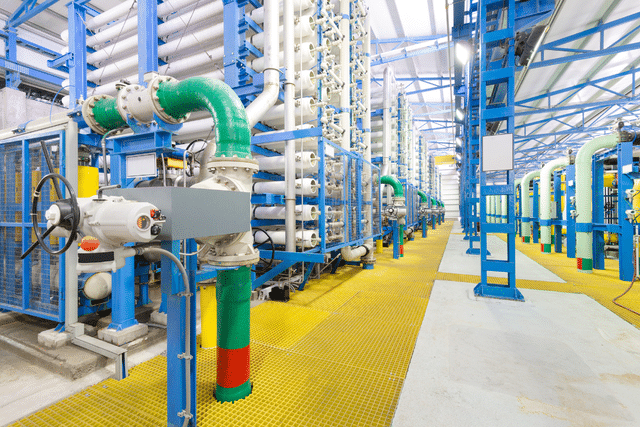
Reverse osmosis systems are highly effective in producing industrial feedwater, but to perform correctly, raw water must be properly prepared.
Factors like hardness and suspended solids must be managed to protect RO performance
In industrial applications, variable feedwater quality can affect operations, compliance, and sustainability. Water chemistry drives scaling, fouling, and membrane performance, so operators and engineers need a practical framework to protect their systems. One way to guarantee consistent quality is to use pretreatment followed by reverse osmosis (RO).
Reverse osmosis systems are highly effective, but they perform only when the feedwater is properly prepared. Most performance issues, whether scaling, fouling, or membrane damage, can be traced back to a handful of water chemistry parameters. Understanding how those parameters translate into operational risk is the foundation of a successful pretreatment strategy.
When considering feedwater, contaminants generally fall into several basic categories:
- Hardness and alkalinity: Calcium, magnesium, and bicarbonate are the main contributors to scaling. When concentrations are elevated, these compounds can precipitate on the membrane surface, restricting flow and reducing efficiency over time.
- Suspended solids: These are often measured as silt density index (SDI) and turbidity. Particulates and colloids can plug filters and accumulate on membranes, leading to fouling and increased pressure drop. While less visible, silica, iron, and manganese can also be problematic. Silica forms stubborn scale, and iron and manganese can foul membranes and resist standard cleaning processes.
- Chemical conditions: Free chlorine, commonly present in municipal water supplies, can damage RO membranes if not removed. pH influences both scaling potential and overall system stability.
Together, these factors define how the membrane is affected by raw water and determine system performance.
Operational Risk in Membrane Pretreatment
Once these parameters are understood, the next step is translating them into operational risk. Elevated hardness, alkalinity, or silica levels typically indicate a risk of scaling, which can lead to reduced permeate flow, higher operating pressure, and more frequent cleanings. High SDI or turbidity indicates fouling potential, as solids accumulate and restrict performance. The presence of chlorine or unfavorable pH conditions introduces the risk of chemical attack, which can permanently damage membranes and shorten their lifespan.
These outcomes are predictable, which is what makes pretreatment such a powerful tool. By addressing risks before water reaches the membrane, operators can avoid unnecessary downtime and extend system life.
Effective Pretreatment Strategies Before RO
An effective pretreatment strategy doesn’t have to be complex, but it should align with the specific chemistry risks present:
- For scaling control, this may include removing or stabilizing hardness and alkalinity through softening, adjusting pH with acid dosing, or applying antiscalants to keep salts in solution.
- When particulate fouling is a concern, media filtration, ultrafiltration, and cartridge filters are commonly used to remove suspended solids, sometimes supported by coagulation in more challenging cases.
- Iron and manganese require a different approach, as they must first be oxidized before being filtered out.
- Chlorine and organic compounds are typically managed through activated carbon treatment or chemical chlorine removal, via sodium bisulfite dosing. This ensures membranes are protected from chemical damage while also reducing the risk of biofouling.
Monitoring is critical across all approaches. Metrics like SDI, iron concentration, and chlorine levels provide real-time insight into whether pretreatment processes are working effectively and whether adjustments are needed.
At its core, RO pretreatment strategy comes down to three steps:
- Know your key water chemistry parameters
- Understand the risks they create
- Apply the right tools to manage risks
For operators, success comes with keeping these parameters consistently within target ranges. For engineers, it comes with designing systems that make that consistency achievable.
RO systems do not fail unexpectedly. They respond to the water they are given. By focusing on what the membrane “sees” and aligning pretreatment accordingly, operators and engineers can reduce operational challenges, improve reliability, and get the most out of their system.
Contact Fluence to learn more about which solutions are best suited to the challenges you face.


