
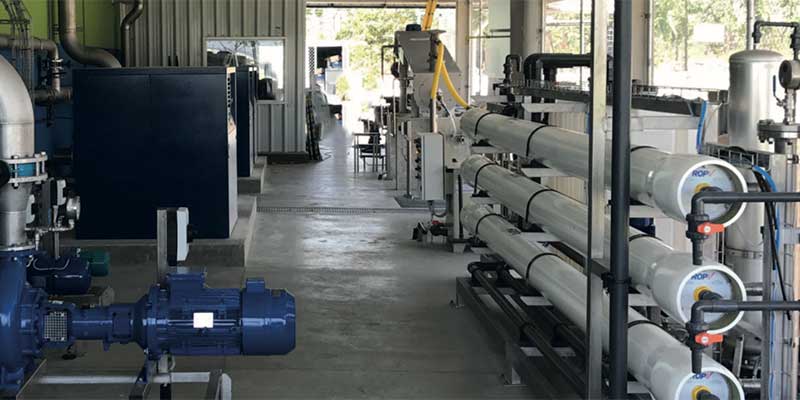
Effective pretreatment protects reverse osmosis membranes by reducing fouling, stabilizing operating conditions, and extending system life.
Protecting membranes, improving reliability, and reducing long-term operating risk
Reverse osmosis (RO) plays a critical role in modern industrial water treatment. The technology delivers consistent, high-quality water for applications ranging from manufacturing and food and beverage production to power generation and high-purity processes. Yet even the most advanced RO systems depend on one essential factor for long-term success: effective pretreatment.
RO pretreatment is often viewed as a supporting component, but it is the foundation for system performance. When feed water is properly conditioned before it reaches the RO membranes, systems operate more efficiently, membranes last longer, and overall lifecycle costs are significantly reduced.
Pretreatment Is Essential to Reverse Osmosis Performance
RO membranes are designed to reject dissolved salts, organics, and contaminants, but they are also inherently sensitive to fouling, scaling, and chemical attack. Suspended solids, biological material, and mineral precipitation can quickly degrade membrane performance.
Without adequate pretreatment, RO treatment systems experience declining permeate flow, rising operating pressures, and increased energy consumption. Over time, these conditions lead to more frequent chemical cleanings and premature membrane replacement, as well as unplanned downtime. In industrial settings where water quality directly affects production, pretreatment becomes not just a maintenance concern but a business-critical requirement.
Understanding the Feed Water Before Designing Pretreatment
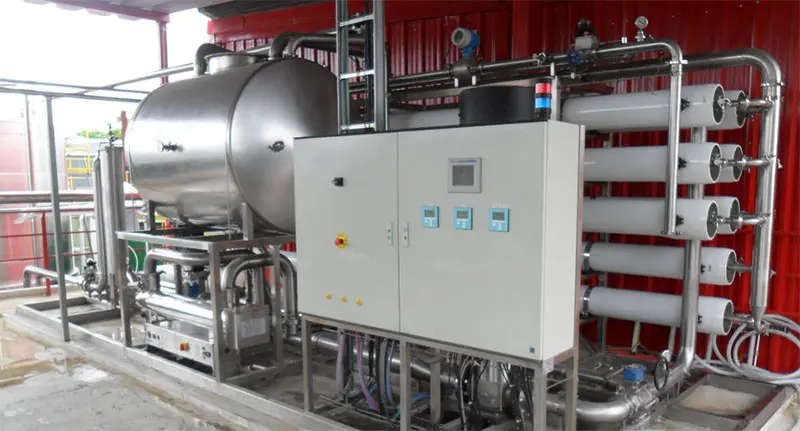
RO pretreatment and system design must be tailored to feed water characteristics to ensure stable performance and long-term membrane reliability.
Successful reverse osmosis pretreatment strategies begin with a clear understanding of the feed water source. Industrial facilities may rely on surface water, groundwater, municipal supplies, or reclaimed process water, and each presents distinct challenges.
Surface water sources often introduce higher levels of suspended solids, organic matter, and seasonal variability. Groundwater frequently contains hardness, iron, manganese, or silica that can lead to scaling. Reuse and reclaimed water sources can introduce biological fouling potential and fine colloidal material.
By thoroughly evaluating feed water characteristics such as turbidity, silt loading, mineral content, and biological activity, pretreatment can be engineered to protect RO membranes under real-world operating conditions.
Physical Pretreatment: Managing Particulates and Turbidity
The first stage of reverse osmosis pretreatment typically focuses on removing suspended solids and particulate matter that can block or foul RO membranes. Mechanical filtration stabilizes feed water quality and reduces variability.
Multimedia filtration is commonly used to remove turbidity and larger particles, providing consistent water quality even when influent conditions fluctuate. Downstream of this step, ultrafiltration (UF) provides a pressure-driven membrane barrier with pore sizes in the range of 0.01 to 0.03 microns that removes fine colloids, bacteria, and many viruses that pass through granular media. This step further reduces silt density index (SDI) and biofouling potential.
Following UF, finer cartridge filtration can be applied as a final safeguard to capture any remaining particulates or fiber breakthroughs before the water enters the RO membranes. Together, these physical pretreatment steps significantly lower fouling potential. They also help maintain stable operating pressures, extend membrane life, and support more predictable clean-in-place intervals across the system.
Chemical Conditioning to Control Scale and Fouling
Along with physical filtration, chemical pretreatment is crucial to protect RO membranes from scaling and chemical damage. Dissolved minerals such as calcium, magnesium, sulfate, and silica can precipitate on membrane surfaces when operating pressures increase, forming scale that restricts flow and reduces membrane efficiency.
Chemical conditioning programs are designed to control these risks by stabilizing water chemistry. Antiscalant dosing helps prevent mineral precipitation, and targeted coagulation improves the removal of fine particles that might bypass filtration. When oxidants such as chlorine or chloramine are present, dechlorination is essential to prevent irreversible damage to membrane materials.
Rather than adding operational complexity, these chemical strategies simplify the long-term operation of RO treatment systems by stabilizing performance and reducing unplanned interventions.
Hardness, Metals, and Challenging Feed Waters
Hardness and dissolved metals are common obstacles in industrial water treatment. Calcium and magnesium contribute to scaling, while iron and manganese can foul membranes and eventually impair performance. Depending on feed water quality, pretreatment strategies may include softening or targeted removal to ensure stable operation.
For more challenging applications, particularly those involving surface water or industrial wastewater reuse, advanced membrane pretreatment such as ultrafiltration or microfiltration provides an added layer of protection. These systems remove fine suspended solids, colloids, and microorganisms, creating a highly stable feed stream for RO membranes and significantly reducing cleaning frequency.
Designing Pretreatment for Long-Term Industrial Reliability
Pretreatment is not a one-size-fits-all solution. Industrial RO treatment systems must be designed around specific water sources, process requirements, and performance goals. A well-engineered pretreatment approach improves operational reliability, reduces maintenance demands, and protects capital investment over the life of the system.
For industrial facilities evaluating RO systems, pretreatment design is most effective when it is integrated into a complete treatment solution. Packaged and containerized systems that account for feed water variability upfront reduce commissioning risk and support long-term performance across changing operating conditions.
When pretreatment is properly integrated into system design, RO membranes operate more efficiently, energy consumption is minimized, and water quality remains consistent, supporting uninterrupted industrial operations and long-term sustainability.
In industrial water treatment, pretreatment is not an accessory to reverse osmosis. It is the foundation that allows RO systems to deliver reliable, high-quality water, day after day. Contact Fluence to explore pretreatment strategies designed around your feed water, performance requirements, and operational goals.


