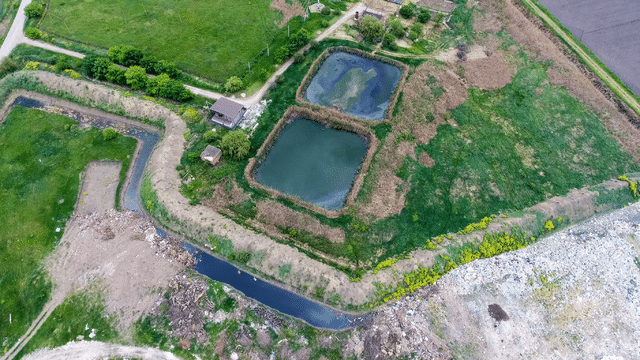
Lagoon upgrades often involve installing more blowers, adding more oxygen diffusers, or extending aeration cycles. These changes improve treatment efficiency. But the tradeoff is higher energy demand.
Adding aeration might improve lagoon performance, but it can raise energy costs. Here’s why smarter oxygen delivery matters.
For decades, lagoons have been the backbone of wastewater treatment facilities, particularly those serving small and rural communities. They are simple, reliable, and inexpensive to run and maintain. But as nutrient limits tighten, operators seek to improve efficiency and ensure compliance.
For many, the solution is to upgrade lagoons by adding aeration. But while adding air enhances treatment efficiency, it can significantly increase energy bills. Below, we look at the true cost of conventional aeration and how MABR technology delivers targeted oxygen transfer with lower energy demand. Smarter aeration can mean lower lifecycle costs and greater operational stability.
The Real Cost Behind Lagoon Upgrades
Aeration supports the bacteria responsible for nitrification, the biological process that converts ammonia into nitrate. When a lagoon struggles to meet new nitrogen limits, the first instinct often is to boost oxygen levels. Higher levels of dissolved oxygen allow the aerobic bacteria that break down organic waste to survive and flourish.
Lagoon upgrades often involve installing more blowers, adding more oxygen diffusers, or extending aeration cycles. These changes increase oxygen availability to the bacteria, allowing colonies to thrive and improving treatment efficiency. But the tradeoff is higher energy demand.
Because aeration systems must run continuously to sustain aerobic bacteria, they become an ongoing expense rather than a one-time capital investment. What began as a compliance upgrade becomes a permanent energy commitment that adds operating cost over the lagoon’s lifespan. That matters because oxygen delivery is often one of the biggest long-term cost drivers in a lagoon upgrade.
Why Aeration Drives Operating Expenses
Most lagoons rely on mechanical surface aerators or submerged air diffuser systems that release bubbles from the bottom of the basin. The goal is to dissolve enough oxygen into the water column to sustain the nitrifying bacteria. While getting oxygen into water may seem straightforward, it is often inefficient and energy-intensive. These factors contribute to the high energy demand of conventional aeration:
- Low oxygen transfer efficiency: Since air is lighter than water, a significant amount of the air injected into lagoons bubbles to the surface and escapes before it dissolves in water and is available to bacteria.
- Continuous power required: Blowers must operate for extended periods to maintain dissolved oxygen levels needed for nitrification.
- Seasonal temperature swings: Because biological activity slows in colder months, operators must increase aeration in winter, resulting in an even higher energy demand.
- Aging equipment: Blowers can lose efficiency, and diffusers can clog, forcing systems to work harder to achieve the same result.
As nutrient regulations tighten, operators often respond by increasing airflow even more. While that strategy can temporarily improve treatment, it also locks utilities into higher energy consumption. In other words, the closer a lagoon gets pushed toward compliance through conventional aeration alone, the more expensive it often becomes to run.
The Energy–Compliance Tradeoff
For many municipalities, tightening nutrient limits creates a dilemma. They are under pressure to meet stricter regulatory standards, but they have operating budgets and infrastructure constraints.
This leaves utilities stuck. If they don’t increase aeration, they risk noncompliance and heavy fines. If they do, they face a future of ballooning electricity costs that can force them to raise rates.
As a result, municipalities often weigh three options:
- Accept higher electricity costs from expanded aeration.
- Invest in major plant reconstruction.
- Risk of noncompliance.
While adding aeration is often seen as the quickest solution, excessive aeration can create operational instability, increase maintenance demands, andelectricity costs. More importantly, it addresses the symptom — low oxygen availability — rather than improving the efficiency of the underlying biological process. The result is a system that works harder, consumes more power, and becomes increasingly expensive to operate. That tradeoff is exactly why many utilities are rethinking whether more air is really the best long-term answer.
How MABR Changes the Aeration Equation
To overcome these inefficiencies, forward-thinking utilities are turning to membrane aerated biofilm reactor (MABR) technology for lagoon upgrades. Instead of pumping large volumes of air into the entire water column, MABR systems deliver oxygen directly to the microorganisms that need it.
In an MABR system, oxygen passes through membranes where a thin biofilm of bacteria grows on the surface. Rather than bubbling air through the lagoon, oxygen diffuses directly into the layer of microbes responsible for treatment.
This design significantly changes the way oxygen is used. Targeted delivery allows microorganisms to access oxygen more efficiently, reducing the amount of air required to support biological activity. And because the oxygen transfer happens directly at the biofilm, far less energy is wasted.
The process also supports simultaneous nitrification and denitrification within the biofilm structure in the same footprint. This enables nitrogen removal without the heavy aeration typically required by conventional systems and reduces the need for extensive internal recycling or additional process tanks.
Since MABR technology relies on passive oxygen transfer driven by a concentration gradient rather than high-pressure bubble diffusion, the energy required is a fraction of that of conventional systems. MABR can reduce aeration energy use by up to 90%.
Compliance Without Escalating Energy Costs
As nutrient standards evolve, municipalities are recognizing that compliance strategies must consider long-term operating costs, not just immediate performance improvements. Aeration-heavy upgrades can meet regulatory targets, but they might have a hidden financial burden.
Energy-efficient biological treatment technologies offer a different path. By improving the way oxygen is delivered and used, systems like MABR can help communities meet nitrogen limits while stabilizing power consumption and reducing lifecycle costs.
For lagoon operators navigating stricter discharge requirements, the key question is no longer simply how to remove nutrients. It’s how to do so without committing their utility to years of rising energy expenses.
Contact Fluence to learn more about our MABR wastewater treatment technology and how it can improve treatment performance and energy efficiency at your facility.


