Ricerca e Sviluppo

See the latest innovations our scientists, engineers, and researchers have been working on
Request Product Data

We're committed to extending the reach of water and wastewater treatment through technological advances

At Fluence, we're working to create a better world through ongoing technological innovation. We're embracing sustainability, economy, and flexibility in our quest to provide clean water wherever it's needed around the world. We strive for excellence through innovation and technological leadership, and our intellectual property is an important aspect of that: Our patents extend across a wide range of treatment equipment and processes.

We believe that the emerging concept of distributed, or decentralized, water management is the key to water sustainability, providing the right water treatment at the point of use, at the right scale -- and at the right price. Recent developments in treatment, automation, remote control, and communication technologies are allowing us to break new ground with systems that lower infrastructure and operating costs and maximize flexibility. Our Smart Packaged water and wastewater treatment solutions take advantage of these innovations to make treatment even more viable.

We're also working to standardize essential features of wastewater treatment to allow for consistent specification of energy consumption and efficiency.

Rigorous Research and Testing

Research and Development

Fluence's R&D center in Israel is the biggest MABR research facility in the world, including pilots and experiments for existing and future product lines. The research center includes a dedicated laboratory equipped with all the sampling equipment necessary to test water and wastewater for BOD, COD, TSS, VSS, TN, TKN, TP, NH4+, NO3, NO2, conductivity, pH, dO2, ORP, and more. Several small-scale pilot plants running at the research center continually test MABR treatment under a range of streams and loads, providing information for small to larger-scale commercial sites.

Some of these pilots have included five in China in 2016, one in the CENTA research center in Spain, and one in 2018 at Stanford University's Codiga Resource Recovery Center in California, which tested MABR systems with very concentrated wastewater streams. The plants reduced the loads to very strict effluent criteria, meeting and exceeding regulations in China and in California, which has some of the most stringent in the United States.

Fluence is currently conducting several collaborative research programs:

  • Investigating water reuse in agriculture under the Horizon 2020 PRIMA program, as part of the DSWAP consortium
  • Researching side-stream treatment with a U.S. company under a binational U.S.-Israel grant
  • Improving the efficiency of energy recovery as part of a U.S.-Israel consortium dealing with the water-energy nexus

We are constantly looking for interesting partnerships for development of new and improved treatment process technologies. Please contact [email protected] with any inquiries.

NIROBOX™ Smart Packaged Water Solutions provide advanced treatment technologies in affordable and compact packages. NIROBOX offers the industry's smallest overall footprint, making it ideal for decentralized treatment in remote locations, and even off the grid.

VIEW NIROBOX INFOGRAPHIC

When a conventional activated sludge wastewater treatment facility has reached its limit, Fluence's SUBRE can come to the rescue. SUBRE MABR towers can be submerged in existing chambers, improving effluent quality, lowering the use of chemicals, saving energy, and increasing capacity.

VIEW SUBRE INFOGRAPHIC

Optimizing Nutrient Removal With MABR

Revolutionary wastewater treatment technology optimizes nutrient removal while slashing energy requirements

In the field of biological wastewater treatment, Fluence has invested years of research and development into the innovative and energy-efficient membrane aerated biofilm reactor (MABR), which provides exceptional nutrient removal while minimizing energy use, making treatment possible even off the grid.

Fluence's MABR uses a proprietary, spirally wound membrane for maximum treatment surface area and optimization of several processes, including simultaneous nitrification-denitrification (SND).

After 7 years of researching and manufacturing MABR membranes, continual improvement remains at the top of our agenda. We have built research stations and are testing different types of materials, packaging forms and other membrane properties to optimize our product for the next generation of MABR.

For example, Fluence is operating a full-scale pilot plant to test the technology's performance in cold climates, as well as developing a smart control system that will allow for SND in MABR-free basins, producing superior effluent quality with minimum energy usage.

One of the first MABR pilot modules we created more than six years ago has been running nonstop ever since under a variety of conditions to test its durability. We have dried it, flooded it, and fed it a wide variety of wastewater streams, and it has continued to do its job!

This revolutionary technology is available in stand-alone plants, as well as in towers that can be used to retrofit existing wastewater treatment plants.

MABR Benefits

Fluence's membrane aerated biofilm reactors:

  • Feature simultaneous nitrification and denitrification for optimized nutrient removal
  • Use up to 90 percent less energy than conventional treatment, cutting operating expenses in half
  • Are quiet and odorless, making them neighborhood-friendly
  • Have lower requirements for an external carbon source
  • Require no internal circulation for nitrogen removal

CONTACT OUR EXPERTS

MABR products in our research center include...

Aspiral™ L

This powerhouse is the foundation of our Smart Packaged series. Since October 2017, a pilot prototype has operated at Fluence's R&D site in Israel, undergoing numerous experiments, and the Aspiral L was based on the results. This pilot continues to be used extensively for experiments to ensure ongoing improvement.

Aspiral™ S

The smallest product in the Aspiral line is configured as a plug-and-play Smart Packaged plant. Since May 2019, Fluence has collaborated with the Spanish research institute, CENTA, to test the Aspiral S, operating it continuously under a wide range of conditions.

Aspiral™ MBR

This has already become one of Fluence's most popular products. It integrates MABR wastewater treatment technology with ultrafiltration under a smart control system that makes the most of the combination. A pilot plant at our research site in Israel has provided the data needed to demonstrate our ability to comply with stringent treatment regulations in the U.S. state of Maryland.

SUBRE

Making a dream come true, SUBRE brings the tremendous advantages of MABR technology to existing wastewater treatment plants. After a small pilot proved the feasibility of the product, we joined forces with an existing plant to test it at full scale. Eleven MABR towers are immersed in the plant's anoxic basin, and together with third-party validators Black & Veatch, we have been monitoring and measuring all the parameters and wastewater data at this installation.

Calculating Energy Use With ISO 21939

The new international standard gives engineers and operators a universal way to calculate energy consumption

In today's environment, energy consumption is an increasingly important consideration in efficient wastewater treatment plant design. The energy consumed by biological treatment processes significantly impacts operational costs and environmental footprints.

ISO 21939-1:2019 introduces a standardized means to express energy consumption for biological wastewater treatment processes. This method accounts for all pollutants and normalizes the calculation of energy consumed to allow meaningful comparisons among facilities and technologies.

Fluence supports ISO 21939. In order to give a more accurate evaluation of process energy use, Fluence uses Normalized Energy Consumption calculations in accordance with the new standard. Learn more here.

Turning Waste Into a Resource

Il team Ricerca & Sviluppo di Fluence Italia vanta una comprovata esperienza nello sviluppo di soluzioni all’avanguardia per la valorizzazione energetica dei rifiuti. Grazie a tecnologie innovative, convertiamo i residui di processo in energia pulita e riutilizzabile, riducendo l’impatto ambientale.

Waste-to-Energy Pilot Plant

Da oltre 20 anni, il team di ricerca e sviluppo di Fluence Italy opera con un forte focus sulle tecnologie di waste to energy, in particolare sulla digestione anaerobica applicata al trattamento delle acque reflue. Abbiamo disponibilità di due impianti anaerobici a fango granulare di tipo semi-industriali, di due digestori CSTR su scala di laboratorio, Fluence Italy è in grado di valutare in modo approfondito i vari processi sopracitati. I principali ambiti di eccellenza e risultati del lavoro del team:

  • Ricerca sui digestori a completamente miscelati (CSTR- Continuos Stirred Tank Reactor) ha permesso all’azienda di affermarsi come leader in Italia nella digestione anaerobica di acque reflue e sottoprodotti industriali, estendendone l’applicazione anche a settori complessi e non convenzionali, come l’industria farmaceutica e trattamento di rifiuti da auto-spurgo.
  • Ottimizzazione del digestato rapido a fanghi granulari mediante il processo EGSB (expanded granular sludge bed, evoluzione del più noto UASB), ulteriormente perfezionato con il reattore proprietario a ricircolo forzato esterno (EFC-External Forced Circulation) che consente il trattamento efficiente di effluenti molto diluiti da birrifici, cartiere e industrie dolciarie.
  • Digestione anaerobica termofila. Una soluzione che prevede il funzionamento degli impianti a temperature elevate, di quelle normalmente previste per la digestione mesofila (55 °C anziché 36 – 40 °C), consentendo un incremento della produzione di biogas a parità di ingombro impiantistico. Questa applicazione risulta particolarmente efficace nel settore lattiero-caseario.
  • Collaborazione con l’Università di Padova sull’applicazione in ambito industriale del processo di ossidazione anaerobica dello ione ammonio (Anammox). Un trattamento di finitura del digestato ad alto contenuto di azoto che permette di ridurre i consumi energetici e il fabbisogno di fonti di carbonio esterne per la rimozione dei composti nitrici.

Processi di idrolisi avanzata. Finalizzata alla riduzione del volume dei fanghi digeriti e all’incremento della produzione specifica di biogas.

In industries that produce waste with a high organic load, Fluence's waste-to-energy technology can generate power, reduce sludge, and help you meet discharge limits.

VIEW WtE INFOGRAPHIC

Containerized Desalination

Specially engineered processes yield high-capacity seawater desalination in standardized, compact units

Containerized Seawater Desalination Units
Fluence Smart Packaged desalination line offers full seawater desalination systems that can treat up to 1,500 m³/d (0.4 MGD) per 40-foot container, the highest capacity available. Developing this standardized and quick-to-deploy product required the engineering of a compact process scheme, using direct feed from UF to RO, as well as a patent-pending UF backwash with RO brine. These features -- in combination with state-of-the-art design and components -- yield lower energy consumption and less chemicals consumption. Learn more about our NIORBOX™ line of Smart Packaged desalination solutions.

Contaminati emergenti

Rimozione di microplastiche e altri inquinanti difficili da trattare per ottenere ad alta purezza per l’industria.
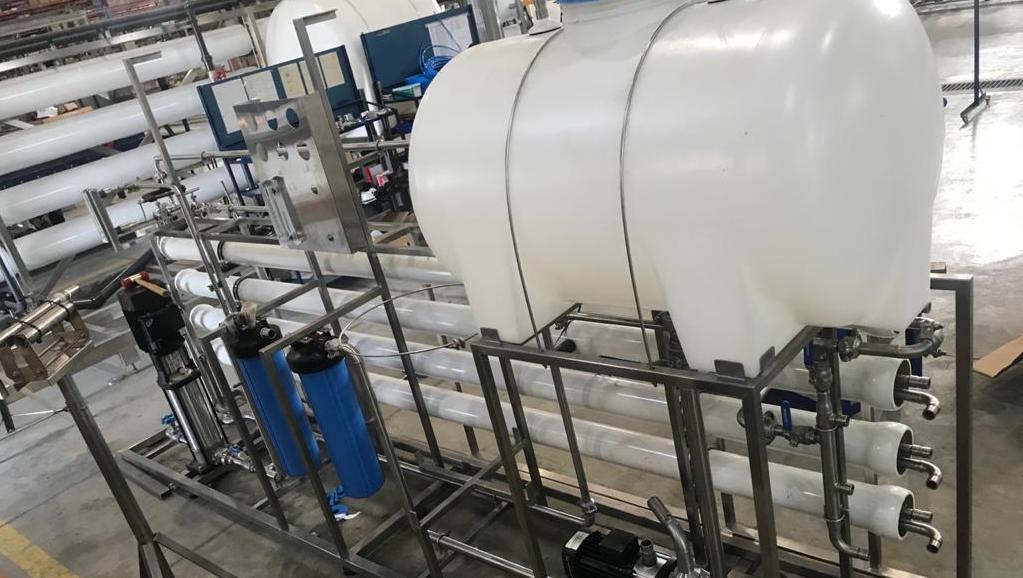
Il team di Ricerca & Sviluppo di Fluence Italy d di Fluence Argentina stanno studiando la rimozione di contaminanti, in particolare microplastiche, antibiotici, ibuprofene e PFAS. Nel 2020 è stato installato un impianto pilota per sviluppare soluzioni multi-barriera per l’eliminazione di questi inquinanti.

Toxic Algae

Toxic algal blooms make water unsafe, but Fluence has solutions to make water safe for irrigation and drinking

Multi-Barrier Treatment for Toxic Algae
Drought is a major cause of global water scarcity, but other factors may contribute to it by rendering existing water unsafe for use. These include harmful algal blooms, which can occur when water is too rich in nutrients, often from wastewater treatment and fertilization runoff. An overgrowth of cyanobacteria, also known as blue-green algae, may release toxins to the water. But affected water can be treated for safe use with a site-specific multi-barrier design. Fluence has developed cost-effective solutions for both safe irrigation (Ecuador) and potable water (Ivory Coast), validating them in the laboratory and through onsite testing.

In Fluence ci impegniamo a rimanere all’avanguardia nello sviluppo tecnologico di tutte le nostre linee, per perseguire il nostro obiettivo: fornire acqua di alta qualità in modo accessibile, ovunque nel mondo.

Siete alla ricerca di soluzioni d’avanguardia per le vostre esigenze di trattamento delle acque e acque reflue? Gli esperti di Fluence possono aiutarvi a trovare la tecnologia ideale per soddisfare i vostri requisiti, con un focus particolare su economia e sostenibilità.

Per ulteriori informazioni sui nostri progetti di ricerca in corso, inviate un’e-mail a [email protected].

Seguire Fluence

Iscriviti per ricevere la nostra newsletter mensile con notizie aziendali, innovazioni e approfondimenti.

"*" indica i campi obbligatori

Questo campo serve per la convalida e dovrebbe essere lasciato inalterato.
Privacy Policy*
Questo campo è nascosto quando si visualizza il modulo
Loading...